REVIEW · ROME
From Rome: Florence & Tuscany Day Tour by High-Speed Train
Book on GetYourGuide →Operated by ItaliaTours · Bookable on GetYourGuide
A train makes Tuscany feel close. This Rome-to-Florence day runs on a high-speed rail backbone, then mixes guided Florence with wine country and the tower town of San Gimignano.
What I like about it is the flow: you get structure (a real guide) and you still get breathing room in Florence and in town for photos and gelato.
I really like two things here. First, the Florence walking tour packs the big icons—Duomo, Baptistry, Piazza della Signoria, Ponte Vecchio—plus stories that explain how Medici power worked (and how people tried to dodge it). Guides such as Antonio and Jessica show up in the day-to-day experience and tend to keep the pace friendly and human.
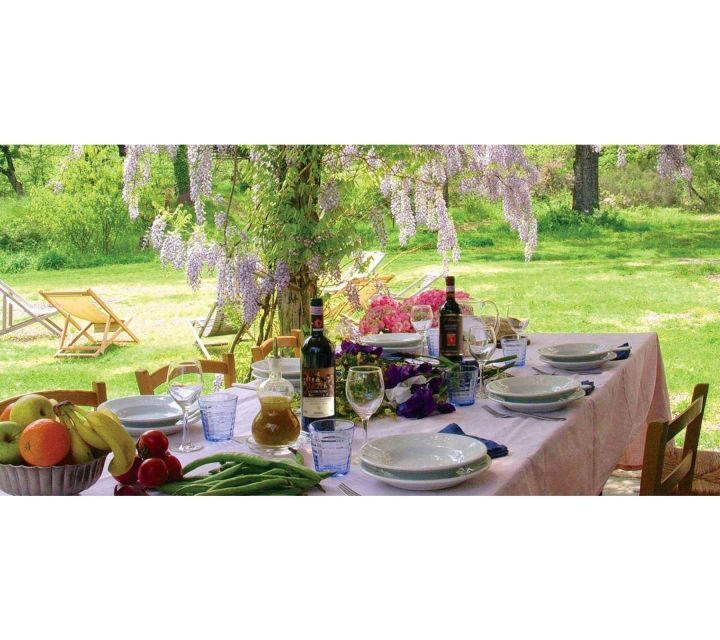
Second, the winery part is the heart of the day: a family-run tasting with lunch in the Tuscan hills. You learn the basics of Italian wine labeling like DOCG and what people mean by Super-Tuscan, and you eat local cured meats, cheeses, breads, plus extra virgin olive oil made on the grounds.
One drawback to plan for: it’s a full 12-hour day with walking and multiple transfers, so comfy shoes matter more than you think. Also, entry fees are not included, so if you want museum stops, you’ll likely pay extra on your own.
In This Review
- Key highlights worth planning around
- High-speed train from Rome to Florence: the real time-saver
- Florence walking tour: Duomo, Piazza della Signoria, and quick Renaissance context
- Vasari Corridor and the Arno area: where the guide earns their pay
- The shift to Tuscany: van ride to winery views with San Gimignano in mind
- Family-run Tuscan winery: wine tasting plus a real lunch pairing
- San Gimignano: 105 minutes for towers, cobblestones, and gelato
- Price and logistics: what you’re paying for (and what costs extra)
- Who this tour fits best (and who should look elsewhere)
- Should you book this Florence and Tuscany day tour?
- FAQ
- How long is the Rome to Florence and Tuscany day tour?
- Where do I meet the guide?
- What’s included in the ticket price?
- Are entry fees included?
- Is lunch included?
- How much free time do you get in San Gimignano?
- How long is the guided tour in Florence?
- How are transfers handled after Florence?
- Is this tour suitable for wheelchair users or people with mobility impairments?
- What should I bring?
Key highlights worth planning around
- Roma Termini meets a guide quickly: meet at Caffè Vergnano at Termini, so you’re not hunting for the group.
- High-speed train saves your day: about 85 minutes each way gives you more time for Florence and Tuscany.
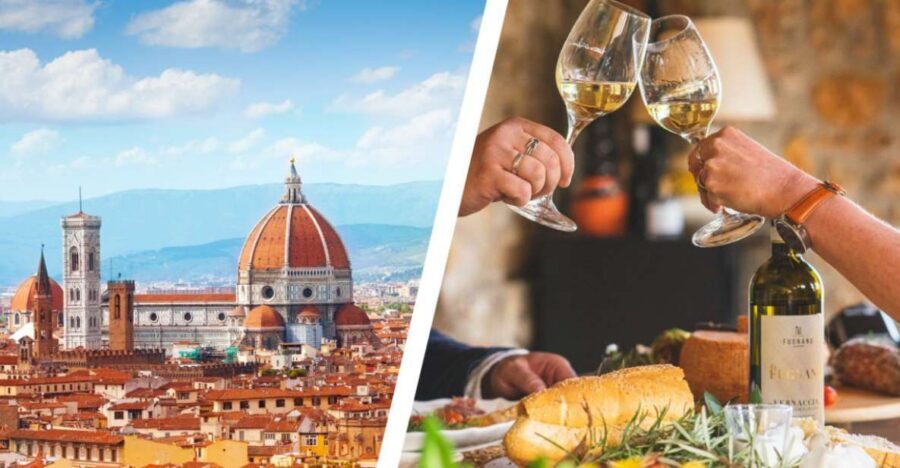
- Florence in guided motion: 3 hours to hit Duomo area landmarks, Piazza della Signoria, and Ponte Vecchio photo time.
- Winery tasting with food pairing: wine plus cured meats, cheeses, breads, and olive oil, then a first-course lunch.
- San Gimignano gets real free time: about 105 minutes to roam the cobblestone streets and look up at the remaining medieval towers.
High-speed train from Rome to Florence: the real time-saver
I love a day trip that doesn’t burn half your energy on road time. This one uses round-trip high-speed rail from Roma Termini to Florence, which keeps the day moving and generally feels easier on your body than a long bus ride.
The timing is built for a full loop: you hop on the train for about 85 minutes, then you’re in Florence with a guide for a 3-hour walking tour. After the Tuscany portion and San Gimignano, you return to Florence station and take the train back to Roma Termini for the same roughly 85-minute ride.
Also, the tour is set up for “organized but not trapped.” You do guided time when you need context (Florence and the winery), then you get your own time in San Gimignano. That balance helps if you love photos but also like to rest your legs for a bit.
Other day trips from Rome to Rome
Florence walking tour: Duomo, Piazza della Signoria, and quick Renaissance context
Florence can overwhelm you fast. You’ll see why the Renaissance took hold here, but you also need a map in your head, not just a camera. That’s what the 3-hour walk does well: it points you to the major sights and explains the why behind them.
Expect landmark-hopping that feels practical rather than chaotic. You’ll pass the Florence Duomo and Brunelleschi’s Dome, then continue toward the Baptistry of St. John with the famous Gates of Paradise motif. You’ll also stop at Piazza della Signoria, where a replica of Michelangelo’s David stands as a reminder that Florence treated art like politics.
Here’s the best part: the guide’s stories connect the dots. You hear about Medici ambitions, greed, power, and the people who tried to conspire against that power. It turns the city from a list of monuments into a place where you can understand motives and conflicts.
A small heads-up: churches and museums can be time-sensitive and sometimes not the focus of a walking tour. If you’re hoping for lots of interior time, manage expectations and plan museum visits for a separate trip.
Vasari Corridor and the Arno area: where the guide earns their pay
After the Piazza area, you move toward the River Arno zone. This is where Florence becomes less about one perfect photo spot and more about understanding how the city was built to serve influential families.
You’ll pass the Uffizi Museum and get a chance to see and talk about the Vasari Corridor. This famous stretch is described as a 1km-long overpass designed to connect the Medici residence with the Uffizi. Seeing it in context makes you realize Florence wasn’t just about beauty—it was also about movement, control, and access.
Then you get a photo-op on Ponte Vecchio, the classic bridge that anchors so many Florence postcards. It’s short, but it’s usually timed well so you can get the shot without losing the whole rest of your day.
The shift to Tuscany: van ride to winery views with San Gimignano in mind
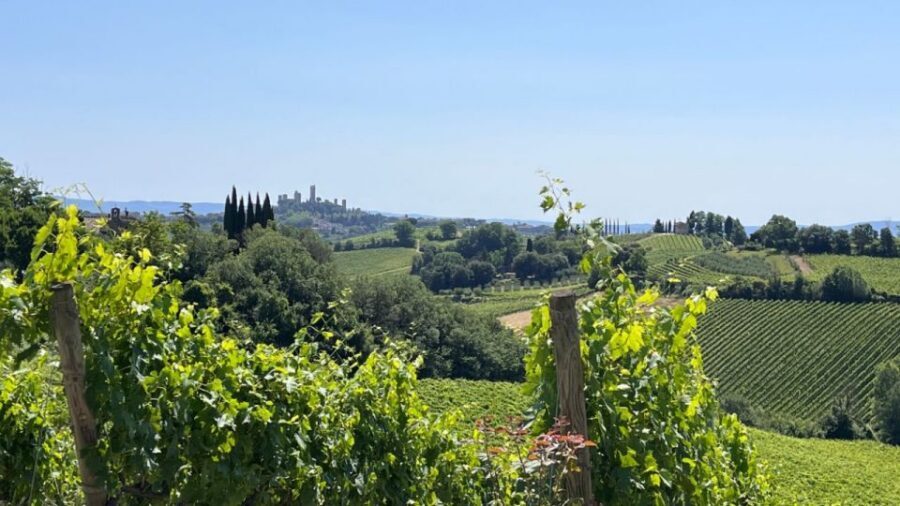
Once Florence wraps up, the day changes pace on an air-conditioned coach ride to the countryside. This transfer takes about an hour, and it matters more than it sounds because it buys you the feeling of “we’re actually in Tuscany now,” not just a Florence add-on.
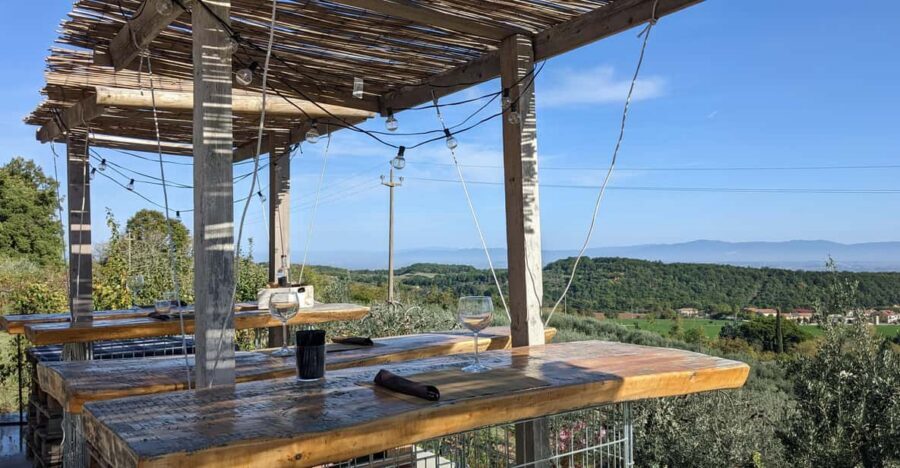
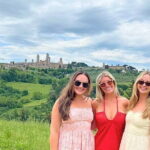
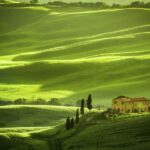
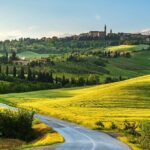
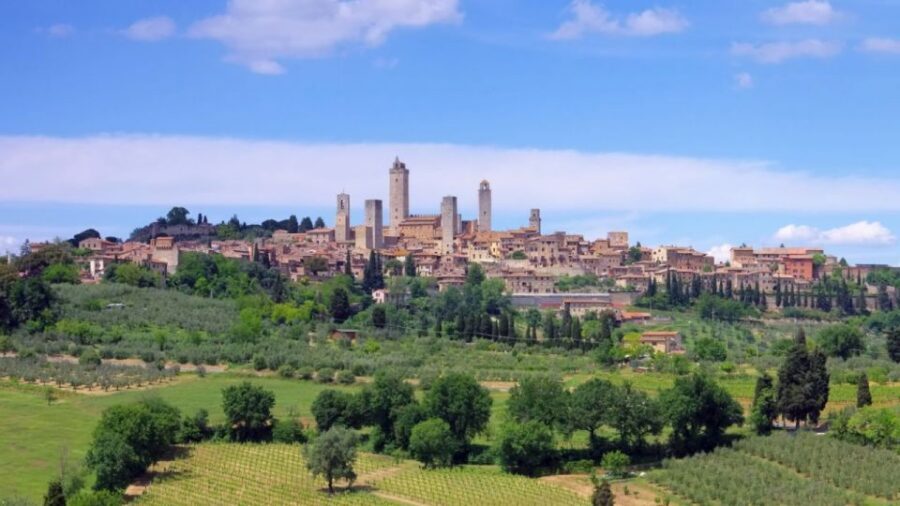
The winery location is set up with a view over the hills toward San Gimignano’s medieval towers. That backdrop is part of why the lunch and tasting feel like a break rather than a scheduled stop on rails.
If you’re the kind of person who gets antsy during long days, this is when you can decompress. Once you’re on the property, you’ll move into the tasting and food pairing, then you’ll have a bit of a “slow down” window before San Gimignano.
Family-run Tuscan winery: wine tasting plus a real lunch pairing
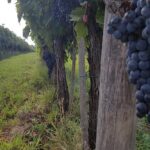
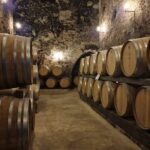
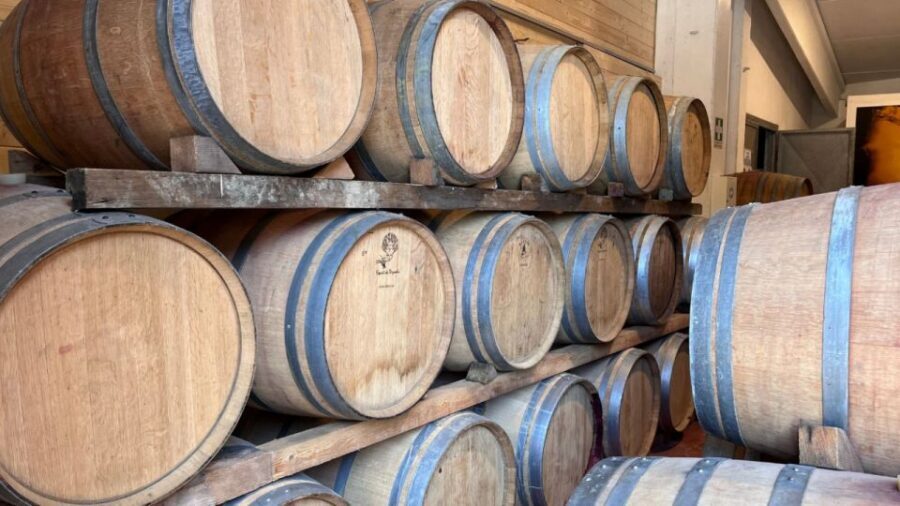
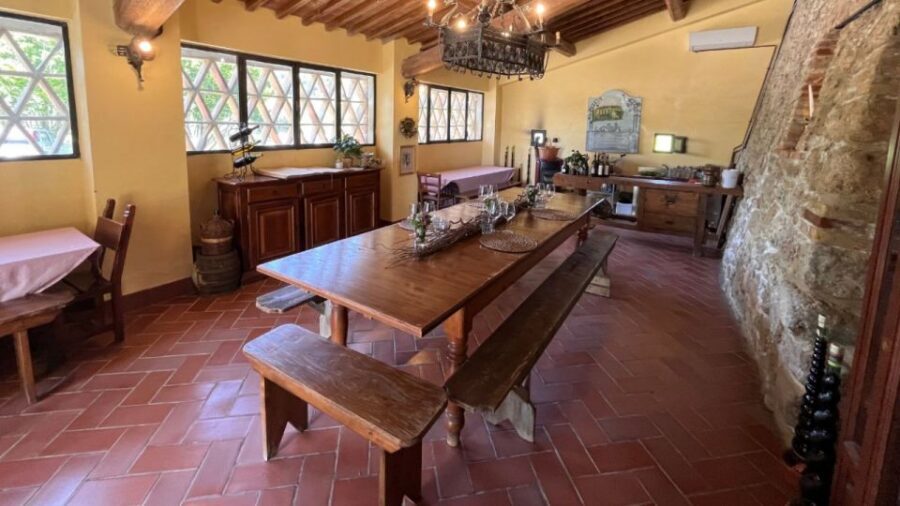
This is the heart of the tour for most people, and for good reason. You get a winery tour with tasting and light lunch that’s built around how wine gets made and how wine gets labeled and sold in Italy.
You’ll hear how age-old winemaking traditions connect to modern production methods used today. The tasting also teaches you basic wine vocabulary in a way that’s actually usable—like what the initials DOCG mean, and how wines get described as Super-Tuscan.
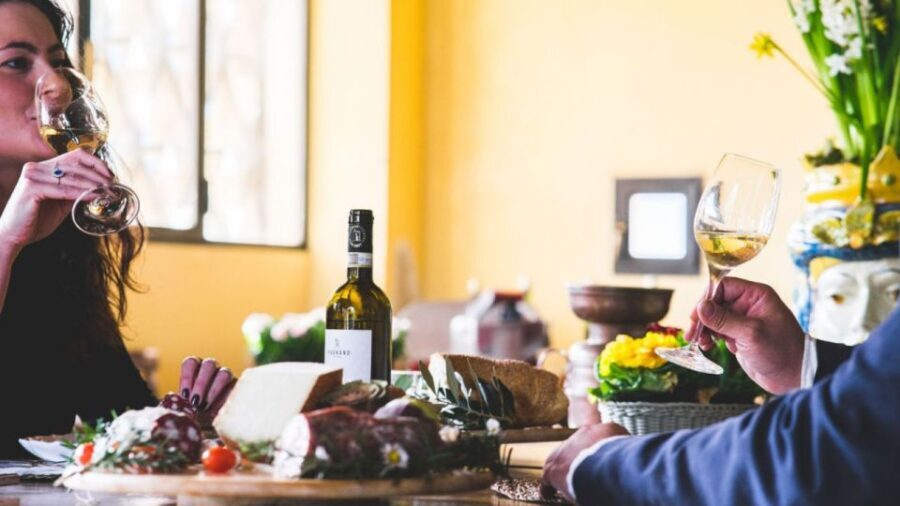
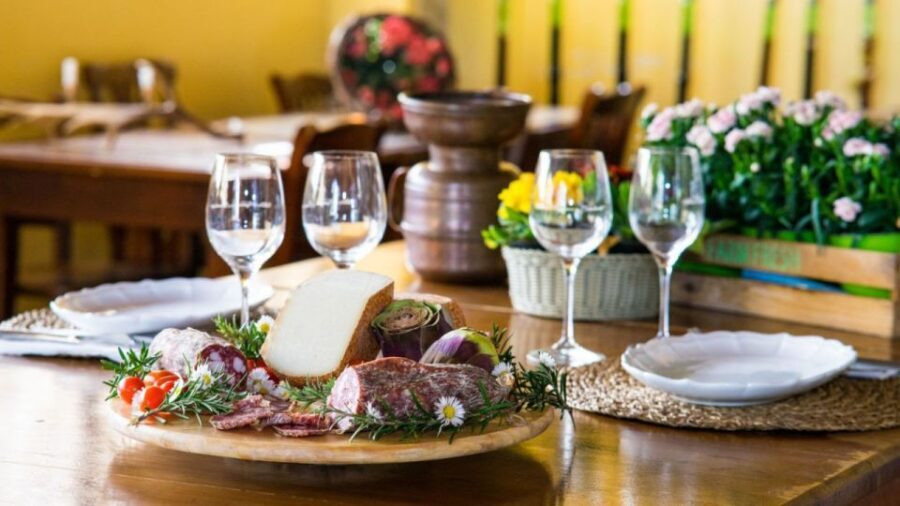
The food pairing is the part that often surprises people—in a good way. Each wine is matched with local cured meats, cheeses, breads, and extra virgin olive oil produced on the grounds. After tasting, you finish with a first-course lunch.
One practical tip: if you’re not a big wine person, don’t worry. The structure helps even if you just want to learn what you’re tasting and why it goes with the food. And if you do enjoy wine, this format gives you a lot more value than a simple sip-and-go experience.
Also, this portion tends to feel intimate. One booking experience described a small group feeling, around six people, which can make conversations easier and questions less rushed.

San Gimignano: 105 minutes for towers, cobblestones, and gelato
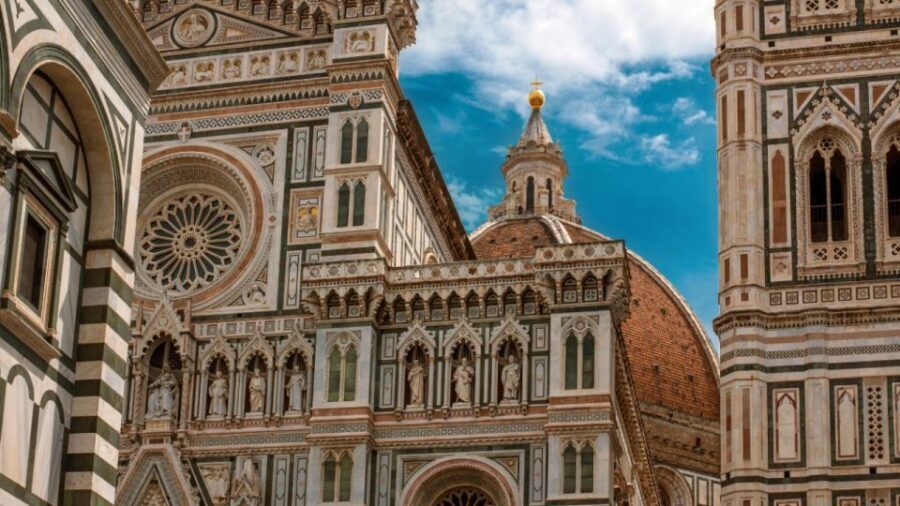
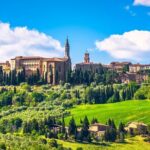
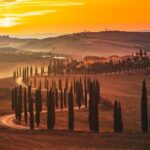
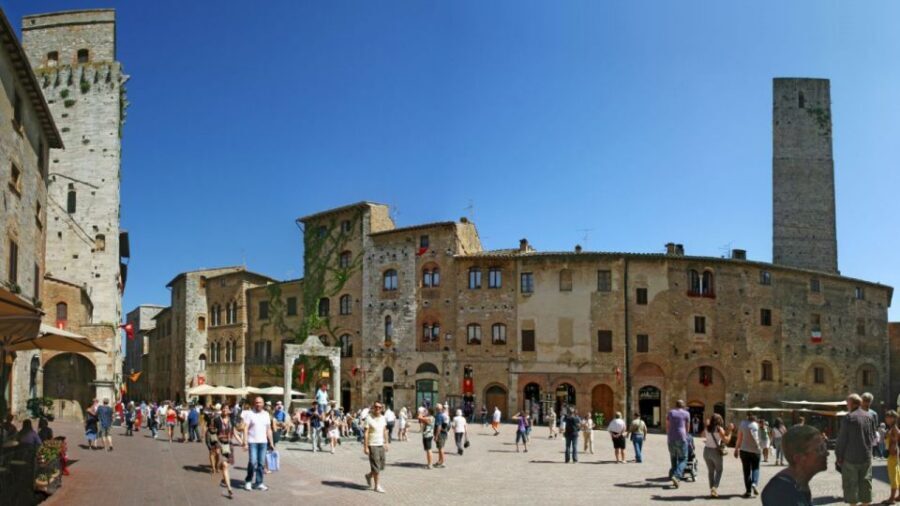
San Gimignano is the classic “why Tuscany is so famous” stop. The tour gives you about 105 minutes of free time, which is enough to wander a couple lanes deep, look up at the towers, and grab snacks without feeling trapped.
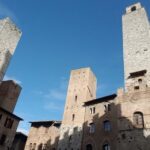
You’ll admire the 14 remaining medieval towers, plus the cobblestone side streets and artisanal shops that pop up in the historic center. It’s the kind of town where you can point your camera up a dozen times and get different angles.
This is also where I think the tour’s pacing shines. After the guided time in Florence and the winery program, the free roam in San Gimignano feels like a reward, not a scramble. You can slow down, decide what you want to see, and fit in gelato—because yes, you’ll want it.
Price and logistics: what you’re paying for (and what costs extra)
The price is $231.20 per person, and it’s not just for sightseeing. What you’re really buying is a bundled day: high-speed train tickets, a guided walking tour, a winery tour with tasting and lunch, and an air-conditioned transfer to San Gimignano.
That said, it’s still a full-day itinerary, so you should expect your day to be active. The tour runs about 12 hours total, and the plan includes walking in Florence plus time on the move between Florence, the winery area, and San Gimignano.
Two costs you should plan for:
- Entry fees are not included.
- Food and drink are not included beyond what’s specified for the winery lunch and tasting portion.
Also, double-check your booking includes the winery tasting and lunch. One experience described confusion around whether the winery lunch was part of the package. If your reservation details look unclear, confirm before the day starts so you don’t lose the part that makes Tuscany worth it.
Who this tour fits best (and who should look elsewhere)
This works best for you if you want a one-day sampler that doesn’t skip the essentials. If you’re visiting Rome and want Florence plus Tuscany without sorting trains, guides, and schedules yourself, this format is a big help.
It’s especially good if you like:
- walking with a guide who explains what you’re seeing
- a structured Florence start, then freedom afterward
- wine country lunch with food pairing, not just a quick tasting
It may be a poor fit if you need full accessibility. The tour notes it isn’t possible to do it with a wheelchair, scooter, or other aid due to the route and transportation. It also isn’t suitable for pregnant women.
Finally, it’s not ideal if you hate long days. You’ll be on the go for about 12 hours. If you want a slower Tuscany trip, you might prefer staying overnight near Florence or Siena.
Should you book this Florence and Tuscany day tour?
If you want the classic “Florence plus Tuscan hills plus San Gimignano” experience in one day, I think this is a smart booking. The high-speed train reduces stress, the Florence walk gives you context fast, and the winery program turns Tuscany into something more than scenic scenery.
Book it when you’re okay with a full schedule and you want guided value where it counts. Skip it if you’re chasing lots of museum interiors, or if mobility limits make long walking and transfers hard.
If you do book, wear comfortable shoes, confirm your reservation includes the winery tasting and lunch, and arrive at Termini early enough to handle station crowds. Then you’ll spend the day doing what Tuscany does best: beauty, food, and a little history you can actually picture.
FAQ
How long is the Rome to Florence and Tuscany day tour?
It lasts 12 hours.
Where do I meet the guide?
You meet your guide at Caffè Vergnano at Roma Termini Station.
What’s included in the ticket price?
Round-trip high-speed rail tickets (Rome to Florence), a guided walking tour, a winery tour with tasting and light lunch, and an air-conditioned coach for the transfer to San Gimignano.
Are entry fees included?
No. Entry fees are not included.
Is lunch included?
Yes. The winery includes tasting plus a light lunch (and a first course lunch is part of the program).
How much free time do you get in San Gimignano?
You get about 105 minutes of free time.
How long is the guided tour in Florence?
The guided walking tour in Florence is about 3 hours.
How are transfers handled after Florence?
After Florence, you take an air-conditioned coach to San Gimignano and then return together back to the Florence train station.
Is this tour suitable for wheelchair users or people with mobility impairments?
No. It is not possible to participate using a wheelchair, scooter, or other aid, and it’s not suitable for people with mobility impairments.
What should I bring?
Bring comfortable shoes. The tour is in English and uses a live guide.