REVIEW · FLORENCE
Tuscan Pasta Masterclass Small-Group Cooking Experience
Book on Viator →Operated by Chef Vary · Bookable on Viator
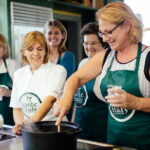
Fresh pasta beats any souvenir. In Florence, you get a hands-on Tuscan pasta class in a modern kitchen, with an English-speaking chef who explains the why behind the how. I especially like that you’re not just watching, you’re working at your own station from dough to shapes.
Two things I really love: first, the menu is built around Tuscan specialties like pici from Siena and Florentine gnudi, plus ravioli and pappardelle variations. Second, you finish by sitting down to eat what you made, with wine built into the experience.
One consideration: this isn’t set up for many serious dietary needs. The class specifically says no gluten-free, no egg-free, no cheese-free, and no lactose-free, and you must be 16+.
In This Review
- Key Highlights You’ll Feel Immediately
- Where the Class Starts: Via Romana and a Quick Walk from the Bridge
- The Big Deal: A Modern Pro Kitchen and Your Own Station
- Choosing Your Menu with Chef Vary (and Why That’s Smart)
- Making Tuscan Pasta by Hand: Pici, Ravioli, Pappardelle, and More
- Pici: The Siena Style That Tests Your Hands
- Ravioli with Potatoes: Comfort Food with Real Technique
- Pappardelle with Tomato, Pesto, or Meatier Sauces
- Gnudi: Florentine Ricotta Spinach (Not Potato Gnocchi)
- Cacao Ravioli: Old Recipe, Surprising Flavor
- Tagliatelle with Chickpeas: Vegetarian-leaning Without Feeling Like a Compromise
- Sauce School: More Than a Finish, It’s Half the Skill
- The Eating Part: Sit Down, Taste, and Compare Your Work
- Price and Value: $156.20 for 2.5 Hours in a Pro Kitchen
- Dietary Needs and Age Limits: Know What’s Offered Up Front
- Who Should Book This Class (and Who Might Not)
- Quick Practical Checklist Before You Go
- So Should You Book Tuscan Pasta Masterclass in Florence?
- FAQ
- How long is the Tuscan Pasta Masterclass?
- Where is the meeting point in Florence?
- Is the class in English?
- What’s the group size?
- Is alcohol included?
- Can kids or people with gluten-free/egg-free/lactose-free diets attend?
Key Highlights You’ll Feel Immediately
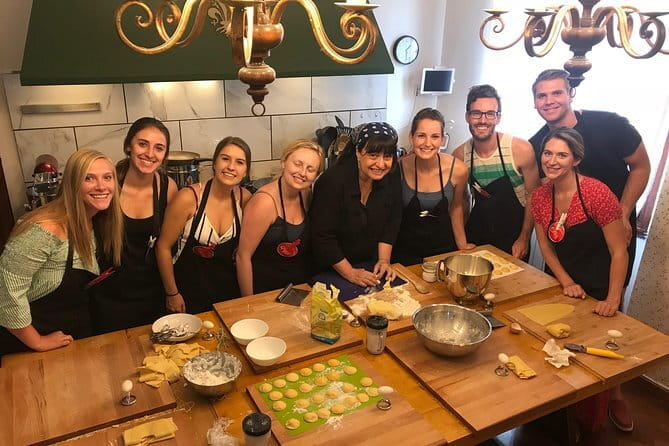
- A real working kitchen setup so you can do the technique, not just learn about it
- Small group size (max 12), which keeps everyone involved at their station
- Tuscan menu variety including pici, ravioli, pappardelle, gnudi, and tagliatelle with chickpeas
- Hands-on pasta shaping tools like a gnocchi board and the chitarra-style approach to pasta cutting
- Chef-led guidance in English with clear steps and practical explanations
- Sit-down tasting with wine so the class ends as a proper meal, not a quick snack
Where the Class Starts: Via Romana and a Quick Walk from the Bridge
The meeting point is Via Romana, 41r in Florence. The kitchen is described as a short walk from the St Trinity Bridge area, which is helpful because you can line this up with other sightseeing days without planning a long commute.
Timing matters here. The class runs about 2 hours 30 minutes, so you’ll want to arrive with enough slack to settle in, meet the chef, and start hands-on work on time. The operator also notes it’s near public transportation, which is useful if you’re hopping across Florence by bus or tram.
If you're still narrowing it down, here are other tours in Florence we've reviewed.
- Tuscany Day Trip from Florence: Siena, San Gimignano, Pisa and Lunch at a Winery
★ 5.0 · 21,634 reviews
The Big Deal: A Modern Pro Kitchen and Your Own Station
This class isn’t in a tiny apartment kitchen. It’s in a modern, professional kitchen with updated tools, and that changes what you can realistically learn in one sitting. You’ll be able to concentrate on technique—cutting, cleaning, kneading, and cooking—without fighting limited space.
The setup also helps with pacing. With a max group size of 12, you’re not stuck waiting for your turn. You’ll be moving from dough to shapes to sauce tasks while the chef guides you in steps you can actually repeat later.
And there’s a practical bonus: bottled water is included, and you get the meal at the end rather than taking everything to go.
Choosing Your Menu with Chef Vary (and Why That’s Smart)
Right when you arrive, you don’t just get a one-size-fits-all itinerary. You’ll decide with the chef what menu you want to do. That matters more than it sounds because Tuscan pasta can be surprisingly different by region and ingredient.
Chef Vary is listed as an archaeologist with a PhD in the evolution of food. That sounds academic, but in practice it means you should expect explanations that connect technique to the ingredients and traditions behind them, not just a list of steps.
You’ll learn how to:
- prepare ingredients (including lots of chopping)
- cut and clean as you work
- cook and knead dough properly
- shape multiple pasta styles instead of repeating just one
If you like learning systems—how to think about dough, timing, and texture—this is the kind of class that fits.
Making Tuscan Pasta by Hand: Pici, Ravioli, Pappardelle, and More
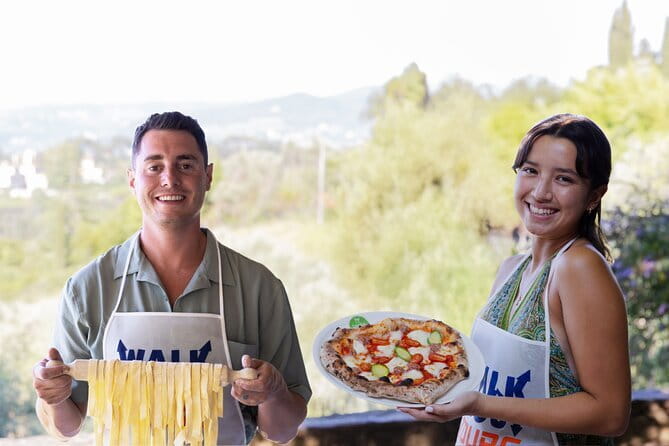
The core of the experience is learning pasta production. And Tuscany has its own patterns for pasta beyond what you may associate with “Italian food.”
Pici: The Siena Style That Tests Your Hands
Pici is a Tuscan favorite from Siena—often described as a straighter, rustic spaghetti style. The class format emphasizes that you’ll be making the pasta from scratch, working the dough, and shaping it using tools and methods designed for this style. You’ll also get a real sense of why Tuscan pasta can feel both simple and oddly tricky: simple ingredients, but texture is everything.
- Cooking Class and Lunch at a Tuscan Farmhouse with Local Market Tour from Florence
★ 5.0 · 4,831 reviews - San Gimignano, Siena, Monteriggioni, Chianti Day Trip with Lunch & Wine Tasting
★ 4.5 · 4,432 reviews
Ravioli with Potatoes: Comfort Food with Real Technique
Ravioli here are filled and then cooked and served with sauces you’ll either make or contribute to. The potatoes filling puts you in a classic Italian comfort zone, and it also gives you a better understanding of how filling affects shaping and seal quality.
Pappardelle with Tomato, Pesto, or Meatier Sauces
Pappardelle is wide and forgiving, which is great for a class environment because it shows you how sauce clings and how pasta shape changes the bite. You may cover several sauce directions, including:
- tomato-based options
- local pesto
- sauces with garlic and cheese
- pancetta and leek
The point isn’t just eating well—it’s learning what sauce choices do to the final texture and flavor.
Gnudi: Florentine Ricotta Spinach (Not Potato Gnocchi)
Gnudi are often called Florentine gnocchi, but they’re not potato dumplings. This class describes them as traditional Florence-style gnocchi made with ricotta and spinach. That distinction is valuable because it corrects a common confusion and gives you a chance to learn a different kind of dough handling.
Cacao Ravioli: Old Recipe, Surprising Flavor
One of the more unusual menu items is ravioli with cacao, described as very old and amazing. Whether cacao is subtle or noticeable, this is the kind of ingredient that encourages you to think beyond “red sauce equals pasta.” It’s Tuscan thinking: use traditional ingredients in unexpected ways.
Tagliatelle with Chickpeas: Vegetarian-leaning Without Feeling Like a Compromise
Tagliatelle with chickpeas rounds out the menu with a hearty, pantry-friendly ingredient base. It’s also the sort of dish that helps you understand how to build richness without relying only on meat.
Sauce School: More Than a Finish, It’s Half the Skill
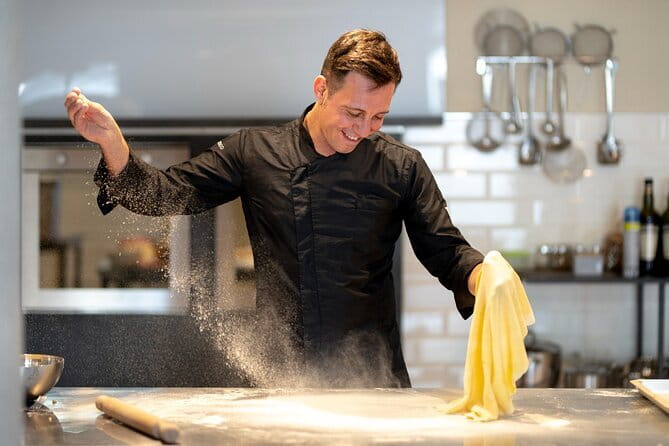
In a good pasta class, sauce is where you learn the real logic: salt balance, fat timing, and how to keep pasta from turning bland or gummy.
In this experience, you’ll sample a range of sauces and techniques, and you’ll be active in preparation. Bottled water is included, and you’ll also get two glasses of alcohol for guests (with a bottle for four guests) during the sit-down meal. Extra wine can be purchased with a discount at the wine store.
A practical note: the class description doesn’t list an option for swapping red for white wine. So if that matters to you, plan accordingly.
The Eating Part: Sit Down, Taste, and Compare Your Work
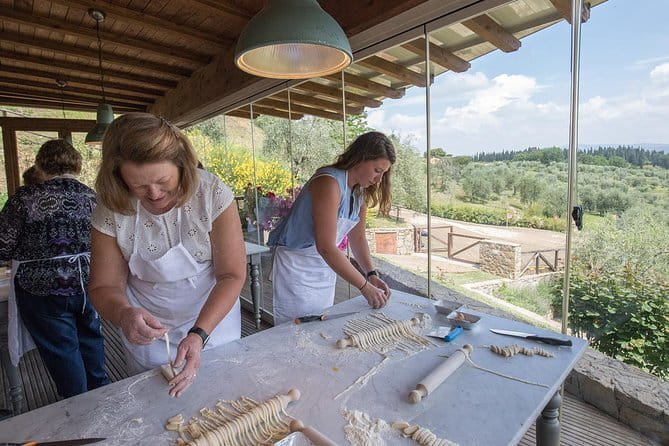
The class ends with a sit-down meal where you eat what you made. This is more than a nice finish. It’s how you learn.
You can compare what you shaped and cooked to what ended up on your plate, and that immediate feedback helps your next attempt at home. You’ll also get time to relax and talk—especially since the chef is English-speaking and the whole format is built for conversation, not silent cooking.
You’re also encouraged to take lessons forward. The experience specifically emphasizes that you learn techniques and tools you can reuse, which is what makes it worth the money versus a basic food demo.
Price and Value: $156.20 for 2.5 Hours in a Pro Kitchen
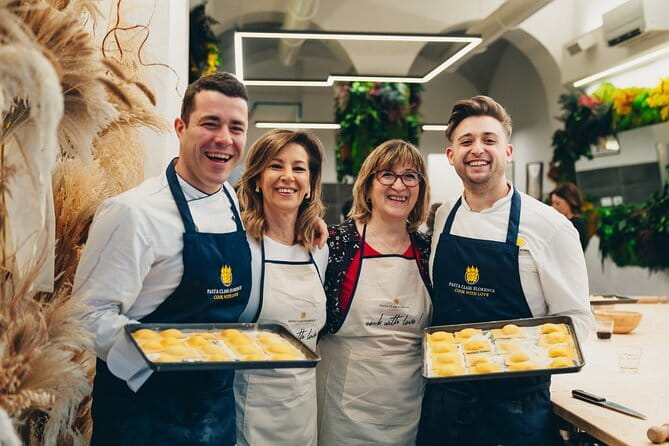
At $156.20 per person for about 2 hours 30 minutes, this class sits in the midrange for Florence cooking experiences. Here’s what makes it feel like decent value:
- You’re paying for a hands-on kitchen with equipment designed for real prep and shaping
- The group limit (max 12) helps ensure actual participation at your own workstation
- You leave with a sit-down meal plus wine rather than just a small tasting
- You learn multiple Tuscan pasta styles and sauce directions, not just one dish
What doesn’t help the value is if you’re mainly there for the “tour” part. This is a working class. If you want to watch and snack, you’ll likely get less out of it.
Dietary Needs and Age Limits: Know What’s Offered Up Front
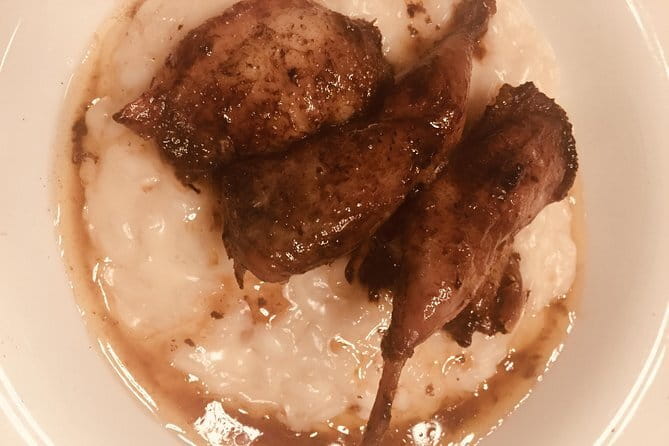
This is a big one for decision-making. The class rules state: no minors under 16. So plan for that if your group includes younger kids or teens.
Dietary-wise, the experience explicitly does not allow:
- gluten-free
- egg-free
- cheese-free
- lactose-free
That means you should not assume simple substitutions will be offered. If you’re outside those boundaries, you can’t really game the system here—you need to pick a different class.
Who Should Book This Class (and Who Might Not)
I think this works best for:
- couples and small groups who want one shared activity that ends in a meal
- beginners who want step-by-step technique with less intimidation
- intermediate cooks who want to refine hands-on shaping and pasta handling
- anyone who loves Tuscan specialties beyond the usual Florence highlights
It may not be ideal if:
- you need strict gluten/egg/cheese/lactose accommodations
- you dislike blunt, no-nonsense teaching styles (some chefs can be direct in the moment)
- you want a long lecture instead of doing the work
Quick Practical Checklist Before You Go
- Bring an appetite for hands-on cooking. You’ll chop, knead, shape, and cook.
- Wear comfortable clothes you don’t mind getting flour on (pasta dough has a way of doing what it wants).
- Plan to arrive on time at Via Romana, 41r so you don’t feel rushed at the start.
- If wine matters, remember the class includes red wine with set portions.
One more reality check: this experience is listed as non-refundable and not changeable. That means you should book only if your Florence dates are stable.
So Should You Book Tuscan Pasta Masterclass in Florence?
If you want an activity that’s genuinely hands-on, teaches multiple Tuscan pasta styles, and pays off in a proper meal, I’d book it. The small-group size, modern kitchen tools, and the chef’s explanation style make it easier to leave with real technique instead of just good memories.
But if you need gluten-free or egg/cheese/lactose-free, or you’re booking for a family with anyone under 16, look elsewhere. This class is better for people who can follow the standard menu rules.
FAQ
How long is the Tuscan Pasta Masterclass?
It’s listed as approximately 2 hours 30 minutes.
Where is the meeting point in Florence?
The class starts at Via Romana, 41r, 50125 Firenze FI, Italy.
Is the class in English?
Yes, the experience is offered in English.
What’s the group size?
This activity has a maximum of 12 travelers.
Is alcohol included?
Yes. The class includes two glasses for guests and one bottle for four guests. Additional wine can be bought with a discount at the wine store.
Can kids or people with gluten-free/egg-free/lactose-free diets attend?
Minors under 16 are not allowed. The class also states it does not offer gluten-free, eggs-free, cheese-free, or lactose-free options.
You Might Also Enjoy
More Tour Reviews in Florence
- Tuscany Day Trip from Florence: Siena, San Gimignano, Pisa and Lunch at a Winery
★ 5.0 · 21,634 reviews - Cooking Class and Lunch at a Tuscan Farmhouse with Local Market Tour from Florence
★ 5.0 · 4,831 reviews