REVIEW · TUSCANY
Corso di Pasta Fresca
Book on Viator →Operated by Agriturismo Biologico Diacceroni · Bookable on Viator
Pasta dough and Tuscan hills go together. This hands-on pasta class in Volterra turns a food lesson into an outdoor-slow, family-style Tuscan meal day, with chef instruction in both Italian and English. You’ll choose what you’re making from Tuscan classics, work at your own station, then sit down to eat the pasta you shaped.
What I like most is that you make three pasta shapes yourself, not just watch and taste. I also love that the meal is part of the experience: your pasta comes out with traditional sauces, plus Diacceroni wine, and you even get a souvenir hat and apron to take home.
One consideration: the class can feel fast-moving once you’re cooking, with limited breathing room between steps and courses. If you’re hoping for a super relaxed pace, plan to go with the flow and ask questions early.
In This Review
- Key Things to Know Before You Go
- Corso di Pasta Fresca in Volterra: the value check
- Arriving at Agriturismo Biologico Diacceroni: what your morning turns into
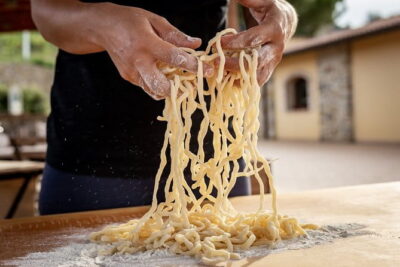
- The Pasta Workshop: three shapes, step-by-step technique
- The pace: where timing can feel intense
- Cooking and Eating: sauces, wine, and a real meal payoff
- Wine note: simple and part of the flow
- Group size and instruction quality: why you’ll likely get help
- What to expect with dishes and choices (and how to avoid confusion)
- Who this pasta class is best for
- Practical tips so your day runs smoothly
- Should you book Corso di Pasta Fresca in Tuscany?
- FAQ
- Where does the Corso di Pasta Fresca meet in Volterra?
- How long is the pasta class?
- How much does the class cost?
- Is the class offered in English?
- What do I make during the course?
- Is the meal included after the cooking?
- Do I get anything to take home?
- Is there a maximum group size?
- What should I do if I have allergies or intolerances?
- Is free cancellation available?
Key Things to Know Before You Go
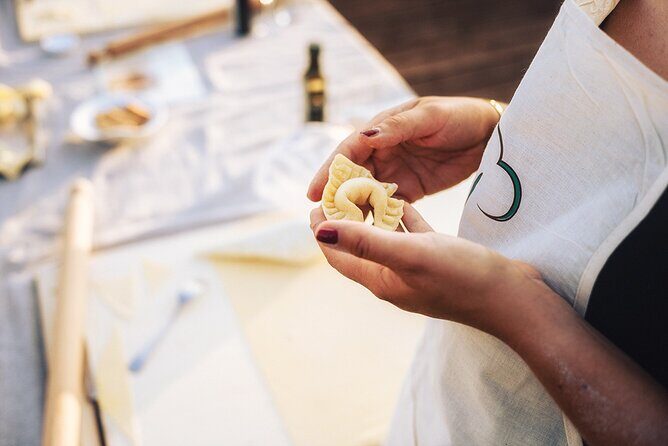
- You make three types of pasta: a stuffed pasta plus two egg pasta shapes.
- You eat what you make, served with traditional sauces, as lunch or dinner.
- Instruction is in Italian and English, so you’re not stuck guessing.
- Small group size (max 15) means more time at your workstation and less waiting.
- A hands-on workstation setup includes apron and ingredients right when you arrive.
- Souvenir hat and apron are included, so you can remember the day beyond photos.
Corso di Pasta Fresca in Volterra: the value check
At $126.50 per person for about 3 hours, this is one of those experiences that can feel pricey until you count what’s included. You’re paying for guided technique (chef-led, not “DIY”), ingredients, cooking time, and then a sit-down meal where your pasta ends up on the table with wine.
This matters in Tuscany because a lot of cooking experiences are either: (1) tasting-heavy with minimal hands-on work, or (2) workshop-heavy with no real meal payoff. Here, you get both—the making and the eating—so the cost lands more like a full agriturismo day than just a kitchen demo.
Also, because the class is limited to 15 people, you’re less likely to spend the day waiting for your turn. That small-group feel is a real value driver. More time working dough usually means better results (and better stories to tell later).
If you're still narrowing it down, here are other tours in Tuscany we've reviewed.
Arriving at Agriturismo Biologico Diacceroni: what your morning turns into
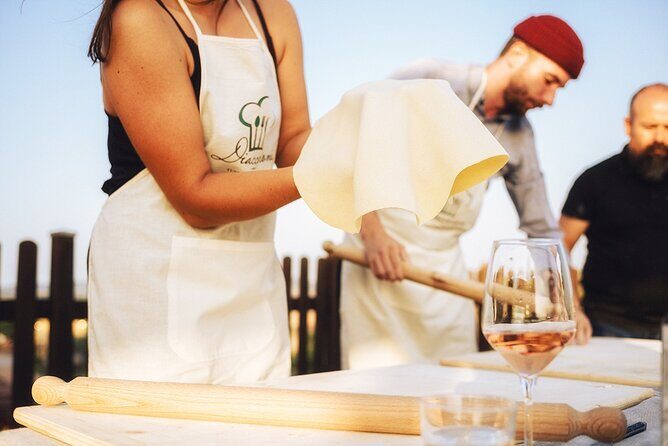
The meeting point is Via della Bonifica, 156, 56048 Volterra PI, Italy, and the activity ends back at the same place. Plan on arriving with enough time to settle in, because once you check in, they place you at your own workstation.
You’ll be welcomed, and your apron and ingredients should be waiting for you. That setup is more than “nice logistics.” It keeps the class moving and helps you focus on what matters: how to portion, mix, knead, shape, and manage the dough so it doesn’t dry out.
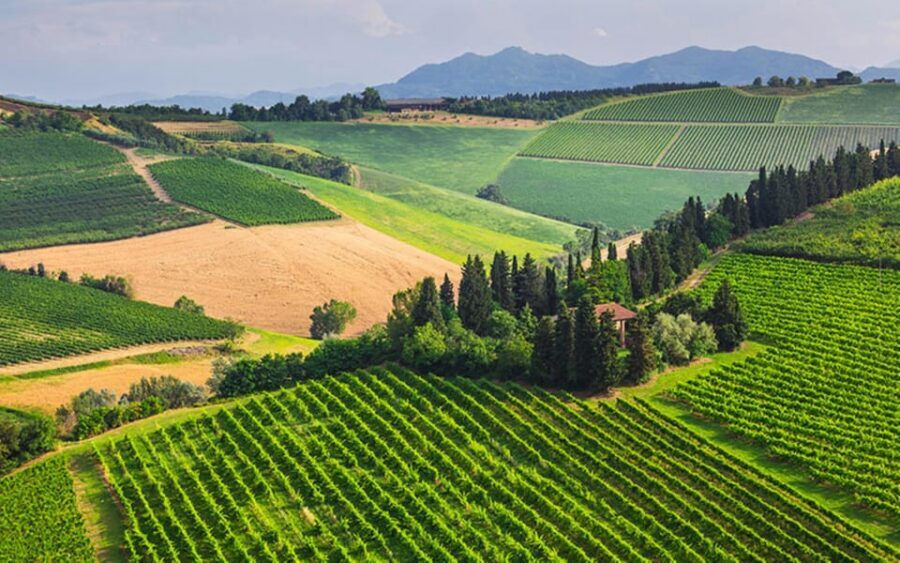
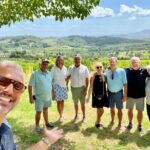
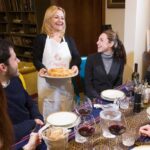
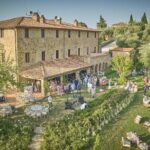
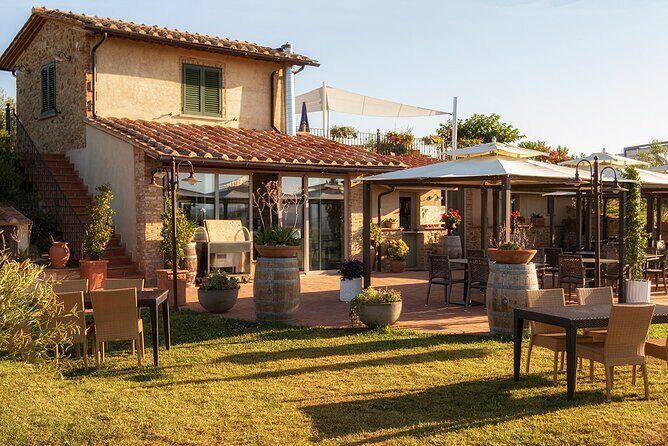
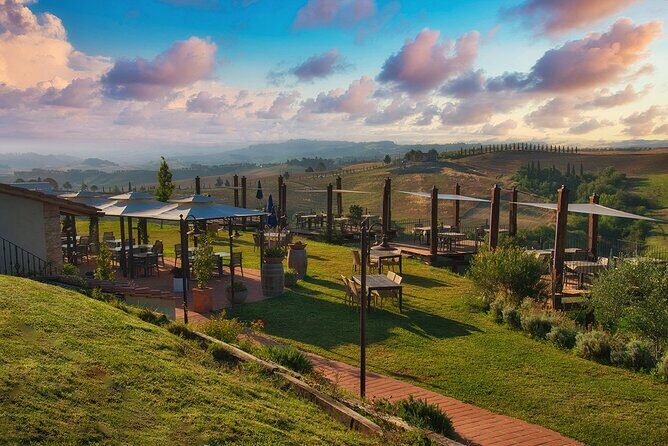
The setting is an agriturismo in the Tuscan countryside near Volterra, and the vibe is described like a cheerful family lunch atmosphere. In practical terms, that means you’re going to eat like you’re part of the household rhythm: courses come out, you don’t linger alone in a buffet line, and you’re expected to enjoy the meal rather than rush to the next stop.
One more practical note: confirmation comes within 48 hours, subject to availability, so if your trip plans are tight, book with some margin.
The Pasta Workshop: three shapes, step-by-step technique
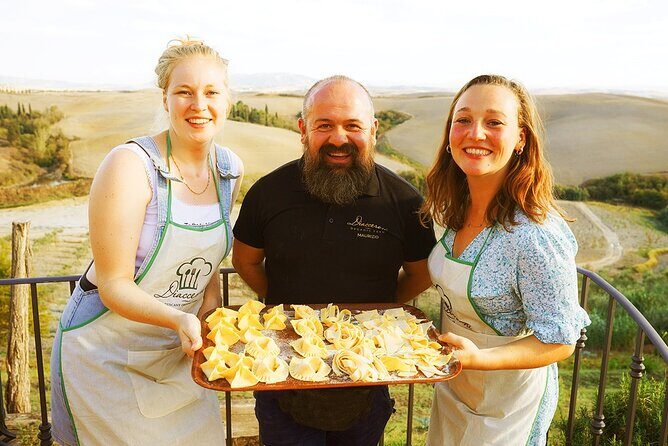
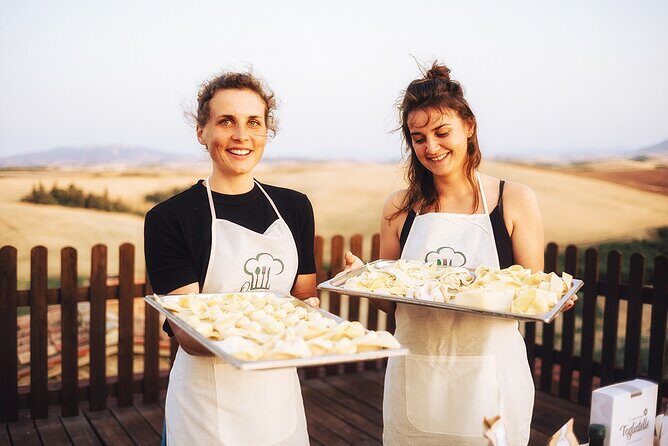
This is a fresh pasta course focused on traditional Tuscan shapes. The structure is clear: you learn and make three pasta forms—a stuffed pasta plus two egg pasta varieties. After you finish shaping, your pasta is cooked and served with traditional sauces.
What you’ll likely notice right away is how they break tasks into teachable pieces:
- how flour behaves (and what that means for texture),
- how to work dough until it’s elastic and workable,
- how shaping changes how pasta holds sauce.
Names like Lucia, Rosa, Naima, Ilenia, Mauricio, and Ariel show up in past experiences tied to patient teaching and clear guidance. That gives you a good hint about what the instruction style tends to be like: you’re not thrown into the deep end without someone explaining the next move.
One thing to keep in mind is menu expectations. The broader description suggests you may have a choice of dishes from Tuscan classics, but a smart way to protect your experience is to confirm what pasta you’ll be preparing on the exact day you book. Even when the course is built around three types, details can vary—so asking directly is worth it if “choice” is important to you.
The pace: where timing can feel intense
Once the hands-on shaping phase ends, the class transitions quickly into cooking and serving. There can be short gaps between pasta courses, and dessert may follow fairly soon. You can still slow down after dinner by ordering drinks, but don’t assume the room will pause on your schedule.
If you like structured classes, this is fine. If you prefer long, leisurely cooking with lots of stopping and starting, you’ll want to ask questions early while the chef is watching your dough.
Cooking and Eating: sauces, wine, and a real meal payoff
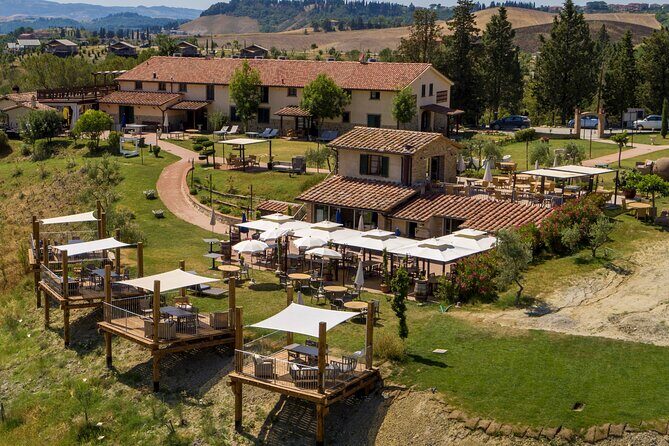
After your pasta is made, it’s cooked and served. This is where the experience earns its keep. You’re not just getting a “here’s a bite” reward—you’re eating a meal built around the shapes you created.
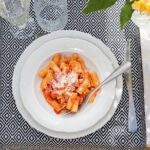
Your pasta comes with traditional sauces, and lunch or dinner is served with Diacceroni wine. That pairing matters because fresh pasta isn’t forgiving like dried pasta. The sauce and timing determine whether the dish tastes delicate and balanced or heavy and flat.
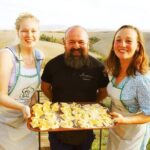
The agriturismo meal also tends to feel social. Some classes include extra touches like musical entertainment during the dining portion. Even if it’s not the same every time, the general rhythm is clear: you make pasta, then you settle in and enjoy what you produced.

Wine note: simple and part of the flow
Diacceroni wine is included with the meal. If you don’t drink wine, you should still enjoy the food portion; the class doesn’t sound like it depends on alcohol to function as an experience. If you do drink, you’ll probably find it pairs naturally with the sauces they serve.
Group size and instruction quality: why you’ll likely get help
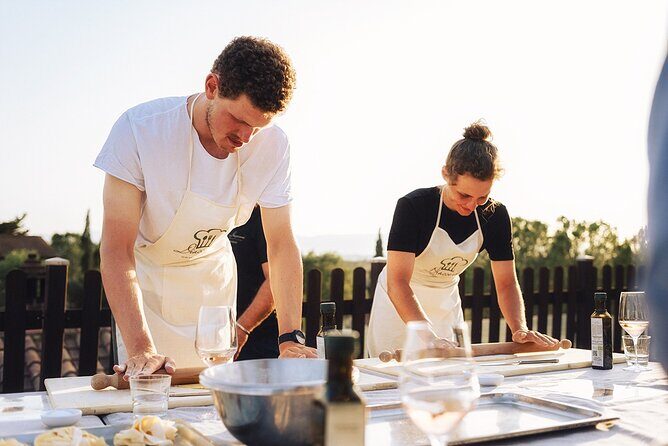
With a max of 15 travelers, you’re in a class size that can actually work in a working kitchen. That usually means:
- you can see what the chef is doing from your station,
- you can ask questions without the instructor having to cover a crowd,
- mistakes become correctable rather than final.
Chef instruction happens in Italian and English, which is a big deal for cooking classes. You’ll hear technique in a language you can understand, and then you’ll also pick up the local food culture side—little stories and curiosities about Tuscan cuisine.
This is also where the “family lunch” atmosphere shows up. The goal isn’t a stiff, school-like lesson. The goal is to help you make something you can be proud of, then enjoy it.
If you want to maximize what you learn, come in curious about process, not just results. Ask how the dough should feel at each stage and what changes if it’s too dry or too sticky. That kind of question makes a short class far more valuable.
What to expect with dishes and choices (and how to avoid confusion)
The course description highlights that you can choose dishes from Tuscan classics, and it also states you’ll prepare three traditional pasta shapes. That can create uncertainty.
Here’s the practical way to handle it: when you book, confirm what your group will make—especially if you’re traveling with someone who cares about specific dishes. If you’re excited specifically about stuffed pasta or particular egg pasta shapes, verify those details so you’re not surprised when you arrive.
This matters because timing is tight. Once the class gets moving, you won’t want to spend energy negotiating. A quick email or message before you go is the easiest fix.
Who this pasta class is best for
This experience is a strong match if you want:
- a hands-on cooking session with guided technique,
- a Tuscan countryside setting around Volterra,
- a full meal right after you cook,
- and a course taught in English (with Italian support).
It’s especially good for couples and small groups who like learning together and then sharing the results at the table.
It may be less ideal if:
- you hate structured time blocks and need a very slow pace,
- you’re extremely picky about exact menus and want guaranteed dish choices,
- or you prefer an all-day food experience rather than a focused 3-hour class.
If you’re the type who likes asking questions and getting direct feedback, you’re exactly the person this format works for.
Practical tips so your day runs smoothly
- Use GPS to find the agriturismo. The address can be less reliable than coordinates when you’re driving in the hills.
- Ask about the exact pasta shapes you’ll make when you confirm your booking.
- Tell them about any food allergies or intolerances during reservation so they can plan safely.
- Keep your phone handy for photos, but don’t let it break your focus while you’re shaping dough.
- If you want a slower dining pace afterward, be ready to request service rather than waiting for someone to return on their own.
Also, service animals are allowed, and that’s a helpful detail if you travel with one.
Should you book Corso di Pasta Fresca in Tuscany?
I’d book it if you want a real cooking lesson plus a meal in a Tuscan countryside setting, without needing to be a skilled cook first. The combination of small group size, English support, hands-on shaping of three pasta shapes, and the fact that you eat your work with Diacceroni wine makes it feel like solid value for the money.
Skip it—or at least confirm menu details first—if you’re sensitive to pace, or if dish choice is a deal-breaker for you. The format is designed to move efficiently, so show up ready to cook, ask questions early, and enjoy the food as it comes.
If your goal is an authentic Tuscan food day where you leave with skills (and a hat and apron), this one fits.
FAQ
Where does the Corso di Pasta Fresca meet in Volterra?
The meeting point is at Via della Bonifica, 156, 56048 Volterra PI, Italy. The activity ends back at the meeting point.
How long is the pasta class?
The duration is about 3 hours.
How much does the class cost?
The price is $126.50 per person.
Is the class offered in English?
Yes. The experience is offered in English, and the course is conducted in both Italian and English.
What do I make during the course?
The course focuses on preparing three traditional pasta shapes: a stuffed pasta and two types of egg pasta.
Is the meal included after the cooking?
Yes. After the pasta is cooked, lunch or dinner is served with traditional sauces, and Diacceroni wine is included.
Do I get anything to take home?
Yes. You receive a souvenir hat and apron.
Is there a maximum group size?
Yes. The class has a maximum of 15 travelers.
What should I do if I have allergies or intolerances?
You should inform the provider of any food allergies or intolerances when making your reservation.
Is free cancellation available?
Yes. You can cancel for a full refund up to 24 hours before the experience’s start time, based on local time.