REVIEW · SIENA
Private Vespa Tour in Chianti
Book on Viator →Operated by Tuscany Private Tour · Bookable on Viator
Vespas turn Chianti into a moving museum. This private Vespa tour is interesting because it mixes countryside roads, flexible stops for views, and real time in small towns (not just quick photo stops). I love the way you travel on a Vespa instead of sitting on a bus, and I love the included stop for Italian lunch and wine tasting. One consideration: you need scooter or motorbike experience and a driving license, and the staff will evaluate your skills before you ride.
You start and finish near Castellina in Chianti, and the day is built around your group only—so the pace and on-foot time can feel personal. If your guide is Tommasso, Martina, or Stefani, you’ll get history explained in a way that makes the streets make sense, from medieval battles to Etruscan tomb mounds.
In This Review
- Key highlights
- Why riding a Vespa is the whole point in Chianti
- Start in Castellina: briefing, licenses, and skill checks
- Radda in Chianti: a wine-town village with ancient roots
- Panzano in Chianti: towers, churches, and the scars of conflict
- The Montecalvario mound and Necropoli del Poggino near Fonterutoli
- Castellina’s fortifications: the Florence versus Siena story you can see
- Lunch and wine tasting: how to make it feel like part of the day
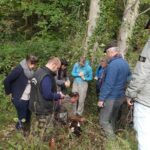
- Private guide perks: Tommasso, Martina, and Stefani on foot
- Timing, what to pack, and how to avoid a sore-day souvenir
- Price and value for a private Vespa day
- Should you book this Private Vespa Tour in Chianti?
- FAQ
- What is the duration of the Private Vespa Tour in Chianti?
- Where does the tour start and end?
- What time does the tour begin?
- Is the tour offered in English?
- Do I need experience riding a Vespa or motorbike?
- What are the driving requirements?
- Which places do you stop at during the tour?
- Are there ticket fees for the stops?
- What is the cancellation policy?
Key highlights
- A true private format: only your group, so you can move at your pace and linger where you want.
- Vespa time plus short walks: you ride between places, then switch to on-foot exploring for the details.
- Radda in Chianti on the clock: about 45 minutes to soak up village atmosphere, with ticket-free time.
- Panzano in Chianti shortcut to the past: around 20 minutes, also ticket free, with strong viewpoints.
- Etruscan sites near Castellina and Fonterutoli: Montecalvario mound and the Necropoli del Poggino are a great change of pace.
- Lunch and wine tasting as the payoff: a proper Tuscan break that ties the whole region together.
Why riding a Vespa is the whole point in Chianti
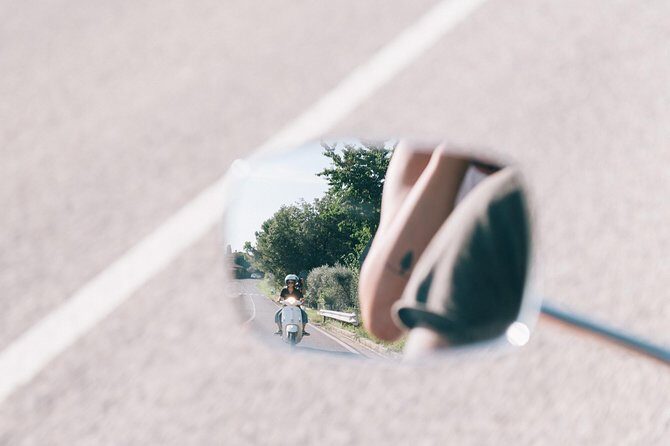
Chianti works best when you’re moving through it. You get that in a practical way: once you’re on a Vespa, you’re not waiting for transport or squeezed into a tight schedule. The roads between hill towns tend to feel scenic in person, and the Vespa gets you close enough to notice the rhythms—vine rows, cypress lines, and the sudden drop into a village you didn’t think would show up so quickly.
This tour is also designed for people who like their travel with context. You don’t just see a viewpoint; you learn why that spot mattered. Radda in Chianti, Panzano, and the Etruscan sites near Fonterutoli all come with layers: ancient settlement, medieval fortifications, and later wine-country transformation. On the bike, those layers don’t feel like homework. They feel like clues.
The private setup matters too. With only your group, your guide can adjust the timing and the walking stops to your comfort. It’s the difference between feeling herded and actually enjoying the ride.
Other Chianti wine tours we've reviewed in Siena
Start in Castellina: briefing, licenses, and skill checks
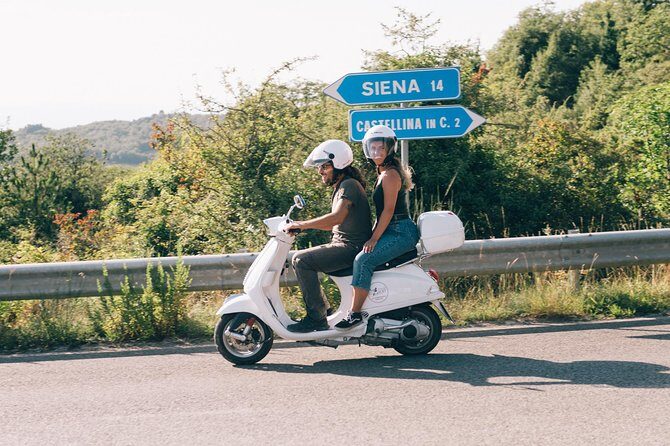
Your day runs from a meeting point in Castellina in Chianti at 10:00 am, and the tour ends back there. Before you go anywhere, you get a briefing with the Vespas. This part is important, because the operator doesn’t treat scooter comfort as a guess.
They require experience with scooters or motorbikes, and they ask for a driving license. Minimum age to drive is 18. Then comes the real-life detail that you’ll be glad is handled: staff will evaluate your skills and decide whether to rent you Vespas. If your skills don’t match what’s needed, the tour will still start using a different vehicle based on availability. That means you’re not stuck watching others ride all day.
Practical tip for you: if you’re a confident rider but not used to hills or narrow lanes, tell your guide early during the briefing. You’ll get better guidance and a smoother first stretch out of Castellina.
Radda in Chianti: a wine-town village with ancient roots
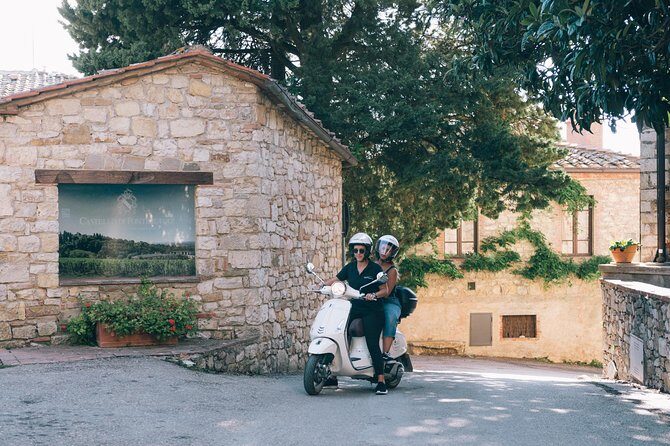
Radda in Chianti is one of those places where the past doesn’t sit behind glass. You spend about 45 minutes here, ticket free, and the goal is to connect what you see with what happened—long before wine became the main language of the hills.
The area around Radda was inhabited extremely early. Archaeological traces at Poggio la Croce point to settlement as far back as 2000 BC, and later you can assume Etruscan presence even where fewer traces survive. By the fall of the Western Roman Empire, around the 5th century, rural agglomerations had already formed—some of the villages that still echo in the region include Castelvecchi, Monterinaldi, Volpaia, and Radda.
What I like about a stop like this is that it gives you a mental map. You understand why the village sits where it does and why the region mattered to rival powers. In the medieval period, Radda is described in documents tied to Badia Fiorentina (including a diploma from 1002 associated with Emperor Otto III and Countess Willa). Later, in 1191, Emperor Henry VI granted the castle of Radda as a fief to the Counts Guidi, and it was confirmed again by Frederick II—though the territory eventually leaned toward Florence.
Then you get the whiplash of warfare: sacking by the Sienese in 1230, occupation by French troops under Carlo I d’Angiò in 1268, and heavy looting during the second Aragonese invasion in 1478. After conflicts eased, the big change came in the 17th century: castles turned into stately villas as owners shifted focus toward wine production.
In other words, when you’re walking in Radda, you’re walking in the middle of a long remake of the countryside—from fortresses to villas. That’s the value of a short but guided stop: it turns a pleasant village into a story you can read.
A possible drawback: 45 minutes sounds short if you want a slow sit-down coffee and extra wandering. If you tend to linger, pick one or two lanes, find the best viewpoint, and trust your guide to route you back for the lunch portion of the day.
Panzano in Chianti: towers, churches, and the scars of conflict
Panzano in Chianti is a smaller stop, about 20 minutes, ticket free. But it’s worth it because it’s packed with readable history in a tight area—exactly what you want when you’re on a schedule and still riding.
The story begins earlier than you might expect. The area was inhabited in Etruscan times, with a stele dating to the 6th–5th century BC found at the parish church of San Leolino (later dispersed). In Roman times, the region was densely inhabited, and traces remain in local place names. Early medieval religious structure matters here too: in the 10th century, the church of San Leolino in Flacciano is mentioned, and later it becomes tied to Panzano.
By the 12th century, the name Panzano shows up in documents connected with San Leolino. And by the early 13th century, you see the church of Santa Maria placed in the castle—suggesting a fortified center. The castle of Panzano had already developed before the 12th century and was associated with the Firidolfi family.
Then the region gets rough. After the Battle of Montaperti in 1260, Panzano’s castle was sacked, and two towers were destroyed by Ghibelline troops. Later, in 1397, during conflict between Florence and the Visconti of Milan, troops under Alberico da Barbiano occupied and sacked the area again.
In 1478, during the second Aragonese invasion, Panzano became a key defensive bulwark for the Florentine Republic, even serving as the seat of a commissioner. After Siena fell in 1555, it didn’t face warfare until 1944.
That’s a lot for 20 minutes, so your guide’s role is crucial. You’ll get the “why this mattered” version of the town, not just a run-through of names.
My practical advice: wear shoes that handle uneven stones. Even if the stop is short, you’ll likely walk a bit between viewpoint angles and church-town corners.
The Montecalvario mound and Necropoli del Poggino near Fonterutoli
One of the smartest parts of this day is adding Etruscan-era stops. It breaks up the medieval and wine-country focus so your brain doesn’t run on autopilot.
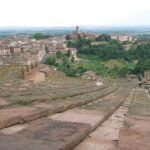
Near the town area, you’ll encounter the mound of Montecalvario, an Etruscan tomb mound dated to the 7th–6th century BC. Then there’s the Necropoli del Poggino, located near Fonterutoli. These sites help you understand that Chianti wasn’t just medieval; it was old, busy, and important long before the big Tuscan powers fought over it.
Here’s the connection that makes it feel real: excavation campaigns in the 1980s in the Castellina area suggest there was a larger settlement nearby, likely located at Salinvolpe, a few hundred meters from today’s Castellina. So when you’re at these Etruscan places, you’re not visiting random ruins. You’re seeing part of where people lived, buried their dead, and organized their society.
If you like variety in a day tour, this is the section that often turns a good ride into a memorable one. You get to stand somewhere quieter and look at the ground for a moment, instead of just chasing viewpoints.
What to keep in mind: there’s no point pretending these sites are like a big museum. Expect outdoors, open air, and a sense of place. Bring a light layer if the wind picks up.
Other Vespa tours we've reviewed in Siena
Castellina’s fortifications: the Florence versus Siena story you can see
You start in Castellina in Chianti and return there, so you’re always in the right region for the medieval “hinge” story. The town’s documents and defensive choices connect directly to the rivalry between Florence and Siena.
In the 11th century, Castellina is described as a fief connected to the nobles of Castello del Trebbio, tied to the Counts Guidi. By the 12th century, Florence’s influence becomes clear. In 1193, an agreement allowed Florentines to militarily preside over the castles of Trebbio and Castiglione (modern Castellina). Then the Lodo di Poggibonsi in 1203 sanctioned the Chianti borders between Florence and Siena, and Castellina became an important Florentine outpost because it sat on a direct road linking the two rival cities.
In the 14th century, Castellina anchors a section of the Lega del Chianti. It’s also described as head of one of the third parts, the Terziere di Castellina, administering the area sloping toward Valdelsa. Then come dramatic moments: in 1397, troops under Alberico da Barbiano, acting for the Duke of Milan Gian Galeazzo Visconti, sack and burn Castellina.
Fortification followed in 1400. There’s even a note preserved in the Florence archives: On site qui dicitur la Castellina fiat fortilitia—meaning fortification should be built there. Work moved slowly, and in 1430 workers from the Opera del Duomo were commissioned to fortify Castellina with other locations, with Filippo Brunelleschi involved in establishing the needed interventions and costs. Later, in 1452, Castellina’s walls held against Aragonese assault.
The sharp turn comes in 1478 during the second Aragonese invasion of Chianti: Castellina falls to Sienese and Neapolitan forces. The defense is described as directed by Giuliano da Sangallo, with Francesco di Giorgio Martini in command of the besiegers. The occupation ends in 1483 when Florentines resume control.
When you hear all of that while you’re in the town area, it changes how you see the streets and structure. You stop thinking of the town as pretty. You start seeing it as strategy.
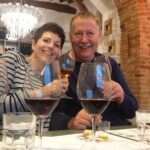
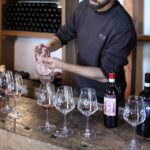
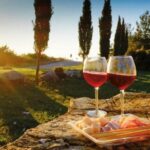
Lunch and wine tasting: how to make it feel like part of the day
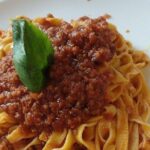
The best tours know when to slow down, and this one does that with an Italian lunch and wine tasting. After hours of riding and walking, you want food that feels earned, not tacked on.
I like that the lunch isn’t just a quick stop; it’s positioned as a savor-and-restore moment that ties together why Chianti is special. By the time you reach the meal, you’ve already heard how these places shifted from castles into wine villas. That background makes the tasting more than a drink—it becomes a payoff for the earlier stops.
Practical tip: go into lunch with your expectations adjusted. You’re on a Vespa day, so you might feel warm, dusty, and slightly energized in that way only hills can do. Ask your guide about how the tasting portion works, then pace yourself. If you’re driving later, make sure you follow the plan your guide gives.
Also, if you want the best photos, step out for a viewpoint right before lunch. You’ll remember the ride better if you save one great view for the moment your phone battery isn’t at 2%.
Private guide perks: Tommasso, Martina, and Stefani on foot
The strongest praise for this tour centers on the guides. Names that show up are Tommasso, Martina, and Stefani. The shared theme is simple: they’re enthusiastic and they explain history in a way that sticks.
A practical bonus is the mix of riding and on-foot time. You can’t read the meaning of a church front or a defensive wall from the seat of a Vespa. So the guide uses the walking segments to give the personal version—short, focused, and connected to what you just drove past.
If you care about authenticity over checklists, this matters. The goal isn’t to rattle off dates. It’s to help you notice why a village looks the way it does and why people fought over it. When the guide brings that connection, even a small town stop feels like a full chapter.
You’ll also get flexibility for viewpoints and village choices. In practice, that means you’re not stuck with one rigid “always the same” route feel. Your guide can work with your comfort level and curiosity.
Timing, what to pack, and how to avoid a sore-day souvenir
A tour starting at 10:00 am and running about five hours is a sweet spot: long enough to feel like a proper Tuscan day, short enough to keep the rest of your trip flexible.
For your comfort, plan for two modes: riding and walking. You’ll want shoes that handle stones and some uneven ground. Bring a light jacket or layer; even in warmer months, hills can cool down fast when you’re moving.
If you’re driving, treat safety as the first priority, not the last. Since the staff evaluates your scooter skills and may switch the vehicle type if needed, arrive ready to ride, not cautious about it. If you wear sunglasses, you’ll be glad for sun and dust protection. If you don’t, you’ll find out why locals do.
Also: count on some wind. Your hair and eyes will get a vote, so plan accordingly.
Price and value for a private Vespa day
Even without seeing a figure here, you can judge value by what you’re paying for: a private, English-offered experience built around real transportation. Instead of a single bus ride, you get a Vespa-controlled circuit between hill towns, plus on-foot time, plus lunch and wine tasting.
That structure matters. Transportation costs are usually what push scooter tours out of reach, but here you’re essentially getting the vehicles, guidance, and the meal payoff as one package. The fact that some historic stops are ticket free (Radda and Panzano are listed as ticket free) also nudges the day toward better value.
Then there’s the “private” part. With only your group, you avoid waiting, negotiating pace, or losing your day to other schedules. In a region where roads and viewpoints can be time-sensitive, a personalized day is the difference between seeing places and actually enjoying them.
Should you book this Private Vespa Tour in Chianti?
Book it if you want a day that feels active but not chaotic: Vespa riding through Chianti, a couple of rewarding village stops, a couple of Etruscan detours, and then lunch with wine tasting to close it out. It’s a great fit for couples, small friend groups, and anyone who likes their travel with context.
Skip it (or at least think twice) if you’re not comfortable on scooters or you don’t have a driving license. The staff will assess skills, and the tour may place you on a different vehicle if you’re not ready to ride.
If you’re confident on two wheels and you want Chianti at human pace, this is the kind of tour that turns a map into a day you can remember.
FAQ
What is the duration of the Private Vespa Tour in Chianti?
The tour lasts about 5 hours.
Where does the tour start and end?
It starts and ends back at the meeting point at Tuscany Private Tour, Via Viale IV Novembre, 35, 53011 Castellina in Chianti (SI), Italy.
What time does the tour begin?
The start time is 10:00 am.
Is the tour offered in English?
Yes, it is offered in English.
Do I need experience riding a Vespa or motorbike?
Yes. The tour requires experience with scooters or motorbikes, and staff will lead a Vespa briefing and evaluate client skills.
What are the driving requirements?
Minimum age to drive is 18, and a driving license is requested.
Which places do you stop at during the tour?
Stops include Radda in Chianti and Panzano in Chianti, plus the Montecalvario mound and the Necropoli del Poggino near Fonterutoli. The tour starts and ends in Castellina in Chianti.
Are there ticket fees for the stops?
Radda in Chianti and Panzano in Chianti are listed as ticket free for the time at those stops.
What is the cancellation policy?
You can cancel for a full refund up to 24 hours before the experience starts. If you cancel less than 24 hours before, the amount paid will not be refunded.