REVIEW · TUSCANY
Tuscan Cooking Class
Book on Viator →Operated by La Chiusa Tuscany · Bookable on Viator
Handmade pasta with local grandmothers beats a museum. In Montefollonico, you’ll join a small group for a hands-on Tuscan cooking class run by local women who teach the way it’s done at home. You make the dough, shape the pasta, and learn what makes these dishes feel so unmistakably Tuscan.
I love two things most: you’re not just watching—you’ll actually prepare three typical pastas plus a seasonal dish, and the cooking lesson ends with a proper tasting of what you made. Also, the format is English-friendly and built for real participation, so you’re not stuck translating in your head while your kitchen skills melt.
One drawback to plan for: you should be ready for a bit of travel time to reach the meeting point area and the property. A taxi may not be instantly available on demand, so think ahead so you don’t stress over timing.
In This Review
- Key highlights to know before you go
- Where you start in Montefollonico matters more than you think
- The 4-hour flow: a cooking lesson plus a real meal
- What you actually make: pici with garlic sauce and ravioli
- Handmade pici with garlic sauce
- Ravioli
- The third pasta you’ll prepare
- Your starter: a typical seasonal dish (not generic)
- Dessert: cantucci with almonds you’ll recognize instantly
- End with a tasting: the part that makes it worth the money
- Local women teaching tradition is the real selling point
- Price and value: what $192.66 buys you in real terms
- Logistics that can make or break your day
- Who this Tuscan cooking class is best for
- Should you book this Tuscan Cooking Class?
- FAQ
- What is the meeting point for the Tuscan Cooking Class?
- How long is the cooking class?
- What do I cook during the class?
- Is the tour offered in English?
- Do I get a mobile ticket?
- How many people are in the group?
- Are service animals allowed?
- Can I cancel for a full refund?
- Is the class suitable for most travelers?
Key highlights to know before you go
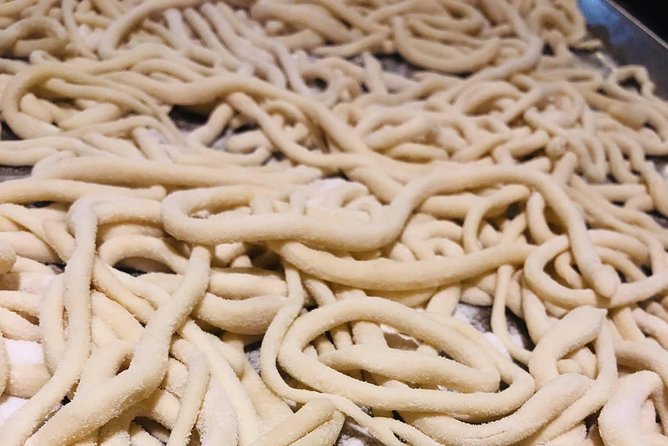
- Three pastas, not a demo: pici with garlic sauce, ravioli, and more hands-on work than you’d expect.
- Seasonal starter included: you’ll learn a typical dish that changes with what’s good right now.
- Cantucci (almonds) for dessert: a classic Tuscan biscuit that’s simple, but not boring.
- Local women as teachers: instruction is grounded in family-style cooking traditions.
- Small group size (max 15): easier questions, more hands-on time at the station.
- Tasting at the end: you finish by eating the results, not just packing them away.
Where you start in Montefollonico matters more than you think
This class starts at Via della Madonnina, 88, 53049 Montefollonico (SI), Italy, and it ends right back at the same place. That “round-trip back” matters because you’re not spending your evening figuring out last-bus timing or stitching together rides after the cooking part.
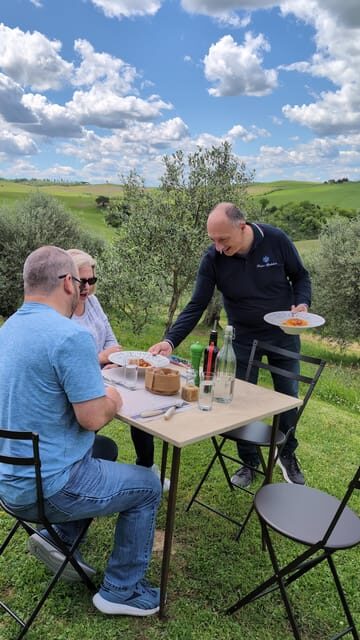
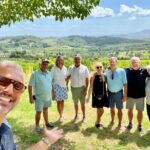
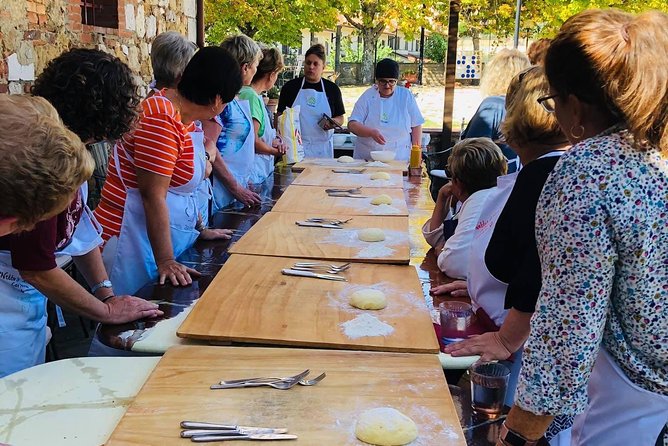
Montefollonico is one of those Tuscan stops where the pace feels slower and more local. You’ll likely feel it the moment you arrive: this is not a glossy studio with identical chairs for everyone. The setting is meant for cooking—real kitchen energy, and a house-style welcome. One highlight noted for this kind of experience is the warm property vibe, with outdoor touches like flowers, a vegetable garden, and lemon trees—stuff that makes you feel like you’re at someone’s home, not in a classroom.
If you're still narrowing it down, here are other tours in Tuscany we've reviewed.

The 4-hour flow: a cooking lesson plus a real meal
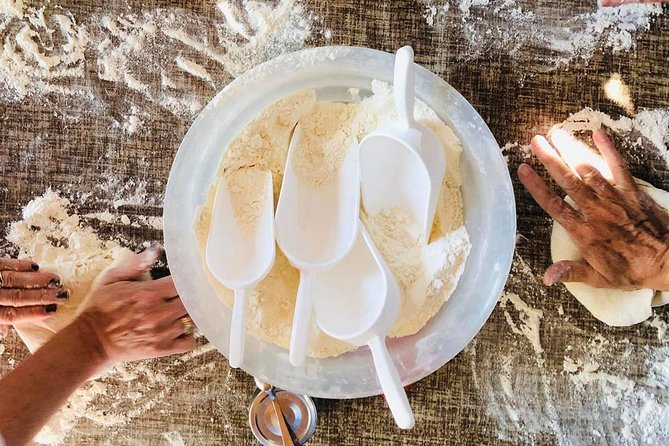
The total experience runs about 4 hours, with the main cooking lessons lasting about 2 hours. The rest of your time is basically there to keep the day enjoyable: settle in, cook, and then eat what you made.
Here’s how the timing typically feels:
- Start and settle: you check in at the meeting point area and get oriented.
- The lesson (about 2 hours): you’ll work through the pasta prep and the seasonal elements.
- Finish with tasting: you sit down and taste the dishes you helped create.
That pacing is a big deal. If a cooking class is only two hours and all you do is watch, it can feel like you left hungry and slightly cheated. Here, the design is clearer: you learn, you cook, and then you eat—at a length that doesn’t feel rushed.
Also, you’ll want to plan for a phone-and-photo moment. The hosts are set up to help with photos even when your hands are busy. That’s useful because pasta dough and phone screens don’t mix well.
What you actually make: pici with garlic sauce and ravioli
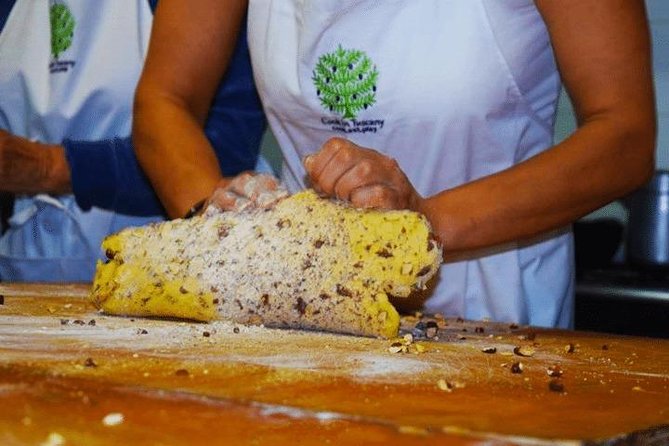
The cooking portion centers on preparing three typical Tuscan pastas, plus more dishes in the mix. A sample menu helps you picture it:
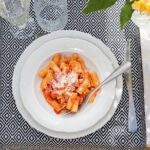
Handmade pici with garlic sauce
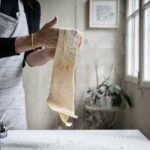
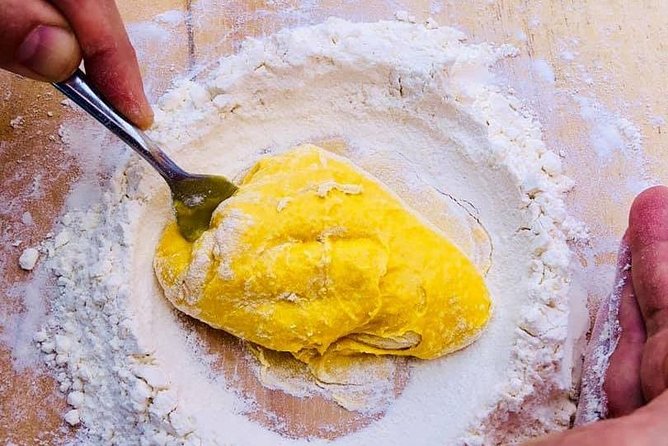
Pici is one of those Tuscan shapes that looks simple, then reveals its trickiness when you try it. You get a chance to work the dough and shape it into the kind of pasta that’s known for being hearty and rustic.
And then there’s the garlic sauce. This is where Tuscan cooking stays honest. Instead of hiding flavors behind complicated tricks, it leans into good ingredients and good technique—so your sauce work matters. Expect your hands to get coated. Garlic does not care about your plans for the rest of the day.
Ravioli
Making ravioli teaches you more than just folding. You learn how filling and dough interact, how the texture should feel, and how to avoid making a mess that turns into a tear-or-bust situation. Even if you’ve never made filled pasta before, this class is set up for you to learn by doing.
If you come in thinking you’ll just get a few seconds of “try this” time, you may be pleasantly surprised. The class is structured for participation, not performance.


The third pasta you’ll prepare
The exact third pasta isn’t listed in the menu details you provided, but the course description clearly states 3 typical Tuscan pastas are part of the lesson. So the day is designed like a true working session—more than “one pasta + a quick demo.”
Your starter: a typical seasonal dish (not generic)
Before dessert, you’ll also cover 1 typical seasonal dish. That’s a meaningful difference from cooking classes that only teach famous “always the same” recipes no matter the month.
Seasonal cooking helps you understand why Tuscan food tastes like Tuscan food. It’s not just tradition for tradition’s sake. It’s the idea that the dish fits what’s available and at its best, which changes flavor and texture depending on the time of year.
So when you taste or cook the starter, you’re also learning how people think during the shopping day back home: use what’s good now, then make it delicious with solid technique.
Dessert: cantucci with almonds you’ll recognize instantly
Dessert is cantucci, the classic Tuscan almond biscuits. You’ll learn why these cookies are such a big deal locally: they’re firm, flavorful, and built for dunking or pairing, depending on how they’re served. Even without extra ceremony, cantucci bring the class full circle—sweet but not sugary in a clumsy way.
Cantucci also make sense for a cooking class because:
- the process is approachable,
- the result keeps well,
- and it’s deeply tied to the region’s everyday eating habits.
And after cooking pasta, it’s a relief to shift to something that doesn’t demand perfection at every second of folding and sealing.
End with a tasting: the part that makes it worth the money
The class ends with a tasting of the dishes you prepared, guided and served with the instructors’ help. This matters because it turns “I cooked” into “I learned what works.”
A tasting is where you can actually judge:
- balance (salt, garlic intensity, sauce feel),
- texture (how dough and filling turned out),
- and flavor (how the seasonal dish holds up on the plate).
It’s also a morale booster. Cooking classes can be tiring. Ending with food you helped make gives you a clean payoff instead of a bill you just paid for a bunch of flour on your hands.
Local women teaching tradition is the real selling point
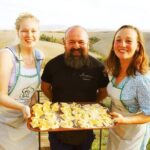
One of the strongest parts of this experience is the teaching style: it’s led by local women, described as authentic custodians of the region’s culinary traditions. That wording isn’t marketing fluff here—it points to what you’ll likely notice in the kitchen: practical instruction, family-style explanations, and a focus on how the food is meant to be made.
When the instructor has that kind of local connection, the “why” behind techniques shows up naturally. You’re not only learning what to do; you’re learning why it’s done this way in Tuscany.
And because the group is limited to a maximum of 15 travelers, it’s easier to get individual help while you’re working. That means fewer mistakes go uncorrected, and you spend more time cooking than waiting for your turn.
Price and value: what $192.66 buys you in real terms
At $192.66 per person, this isn’t the cheapest activity on a Tuscan weekend. But it also isn’t priced like a quick, hands-off tour. You’re paying for:
- hands-on work making multiple pastas,
- additional cooking and prep for a seasonal dish,
- learning to finish with cantucci,
- and a tasting meal that lets you eat the results.
For many cooking classes, the cost can feel hard to justify when you only make one thing and then snack. Here, the menu format and lesson structure suggest you’ll be busy for most of the experience, with about 2 hours of active cooking and then tasting.
So the real value question is simple: do you want to cook, or do you want to watch? If you want to cook—and you want a small-group class with English support—this price starts to make sense fast.
Logistics that can make or break your day
A few practical points to keep your day smooth:
- Mobile ticket: it’s provided, so keep it accessible on your phone.
- Meeting point is fixed: Via della Madonnina, 88 in Montefollonico. Get there a little early so you don’t walk in rushing.
- Transportation: plan on the fact that reaching the property may require a short drive from the nearest town, and taxis may not be easy to grab last minute. If you’re staying in a busier area, arrange your ride timing ahead.
Also: the class is offered in English. That’s not just helpful—it’s a big deal for hands-on learning, because you can ask questions about dough feel, timing, and sauce consistency without guessing.
Who this Tuscan cooking class is best for
This is a good fit if you:
- enjoy cooking and want a hands-on class, not a performance,
- like classic Tuscan dishes (pasta, garlic sauce, ravioli, cantucci),
- want a small group setting so you’re not lost in the crowd,
- and prefer learning from local instructors with a traditional approach.
If you’re the type who just wants a scenic drive and a photo at the end, this may not feel worth it. But if you want flour on your hands and a dinner you helped build, it’s a very solid choice.
Should you book this Tuscan Cooking Class?
I’d book it if you want a real cooking session in Tuscany with a clear menu, a small group limit, and a finish that includes tasting what you made. The combination of three pasta efforts, a seasonal starter, and cantucci is the kind of full meal structure that tends to feel memorable later.
Skip it (or at least think twice) if you hate hands-on cooking tasks, or if you’re likely to struggle with last-mile transport on the day you go. Plan your ride, arrive calmly, and you’ll spend your 4 hours exactly the way this class is meant to be experienced: in the kitchen, then at the table.
FAQ
What is the meeting point for the Tuscan Cooking Class?
The class starts at Via della Madonnina, 88, 53049 Montefollonico (SI), Italy and ends back at the same meeting point.
How long is the cooking class?
The experience is about 4 hours total, with cooking lessons lasting about 2 hours.
What do I cook during the class?
You’ll prepare 3 typical Tuscan pastas, plus garlic sauce, 1 typical seasonal dish, and cantucci (Tuscan almond biscuits). The sample menu includes handmade pici with garlic sauce and ravioli.
Is the tour offered in English?
Yes. The experience is offered in English.
Do I get a mobile ticket?
Yes, it’s listed as having a mobile ticket.
How many people are in the group?
The experience has a maximum of 15 travelers.
Are service animals allowed?
Yes, service animals are allowed.
Can I cancel for a full refund?
Yes. Free cancellation is available up to 24 hours in advance for a full refund. If you cancel less than 24 hours before the start time, the amount paid is not refunded.
Is the class suitable for most travelers?
It says most travelers can participate.