REVIEW · MONTEPULCIANO
Italian Wine Tasting with Professional Sommelier in Montepulciano
Book on Viator →Operated by Enoteca PerBacco · Bookable on Viator
Wine class in a real Italian setting.
This Montepulciano tasting pairs a terrace aperitif at Osteria del Borgo with a cellar-room lesson on Tuscany’s best-known styles. I like that the format is built for learning fast: you taste, you compare, and you get plain-English guidance from the team behind the Perbacco Wine Club, including Francesco, with sommelier support such as Erica or Tassos.
You’ll also get complimentary snacks, water, and even premium extra virgin olive oil while you work through the lineup. One thing to keep in mind: this is not a vineyard walk or a full producer visit. It’s a focused tasting in restaurant spaces, so if you’re chasing barrels-and-vines visuals, you might want to add a separate winery tour.
In This Review
- Key points to know before you go
- Arriving at Osteria del Borgo at 4:00 pm
- The cellar-room tasting format that actually helps you learn
- How the sommelier explains Tuscany without the stuffiness
- What you’ll taste in Montepulciano (and why the lineup varies)
- Snacks, water, and olive oil: the underrated part
- Francesco and the sommelier team: storytelling with intent
- Price and value: is $83.27 for 1 hour 45 minutes worth it?
- Making it part of your Montepulciano evening
- Who this Montepulciano tasting fits best
- Should you book this Montepulciano wine tasting?
- FAQ
- What time does the tasting start in Montepulciano?
- How long is the experience?
- How many wines are included?
- Is the tour offered in English?
- Are snacks and water included?
- Is this a small group?
- Can I get a refund if I cancel?
Key points to know before you go
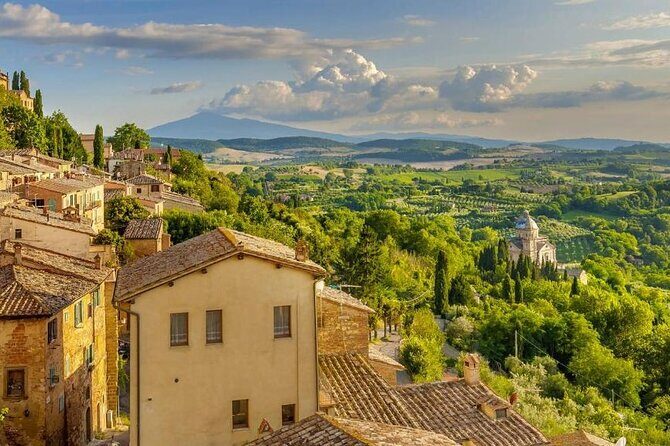
- Terrace start at Osteria del Borgo with an aperitif before you move indoors
- 7 wines planned, with some tastings running closer to 9 depending on the exact lineup
- Tuscan style comparison: Vino Nobile, Brunello, Chianti Classico, Supertuscan, and more
- Extra virgin olive oil + snacks + water included, so the tasting doesn’t feel like a dry lecture
- Small group feel (up to 25 people) guided in English
- Francesco and his sommelier team (often Erica or Tassos) make questions easy
Arriving at Osteria del Borgo at 4:00 pm
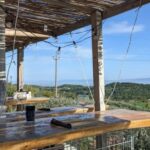
The experience starts at Osteria del Borgo, Via Ricci 5, in Montepulciano, at 4:00 pm. That timing is smart. You’re catching the town in late-day mode, and you start with an aperitif on the terrace before the tasting work begins.
Even if you’re not the type who keeps wine notes, the terrace step helps you slow down. It also sets the tone: you’re not being marched through a checklist. You’re settling in, looking out over the area, and getting a short intro so the cellar tasting makes sense when you start pairing tastes with styles.
The meeting point is the end point too. When you finish about 1 hour 45 minutes later, you’re back where you started, which saves you from any last-minute wandering.
Other Vino Nobile and Montepulciano tours in Montepulciano
The cellar-room tasting format that actually helps you learn
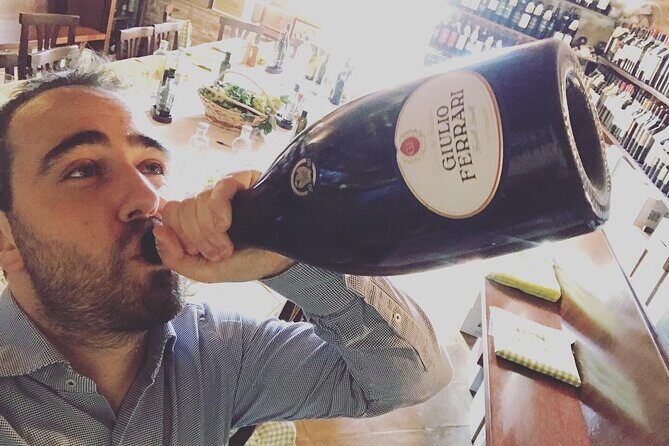
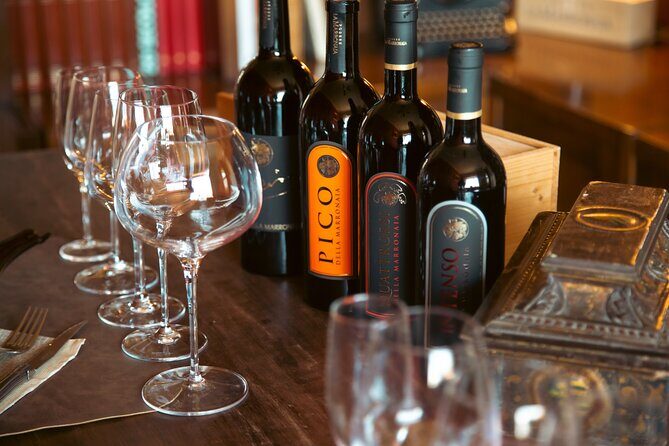
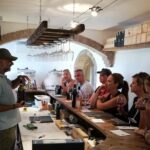
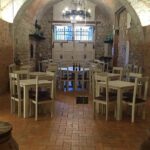
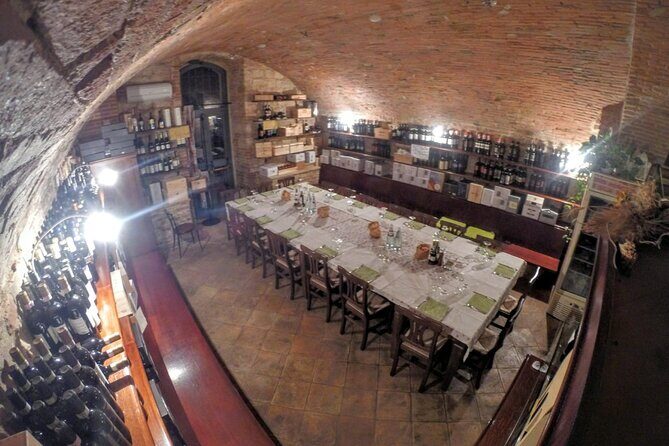
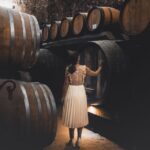
After the terrace intro, you move to the cellar room for the main event. This is where the tasting stays practical. You’ll sample 7 Italian wines and premium extra virgin olive oil, guided by a professional sommelier.
The big value here isn’t just what you drink. It’s how you’re taught to notice differences. The sommelier’s job is to connect each wine to its region and style so you can build a mental map, not just remember flavors. That’s how a Montepulciano tasting turns into real wine confidence you can use later in shops and restaurants.
Because you’re indoors in a dedicated tasting space, it stays comfortable even when the weather swings. And because the group size stays under 25, it doesn’t feel like you’re shouting over background noise.
How the sommelier explains Tuscany without the stuffiness
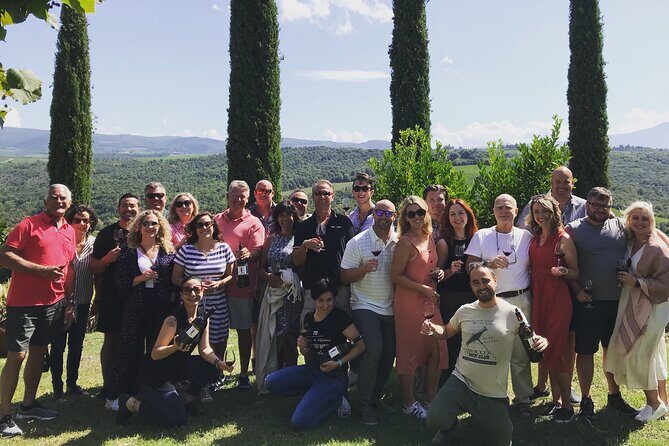
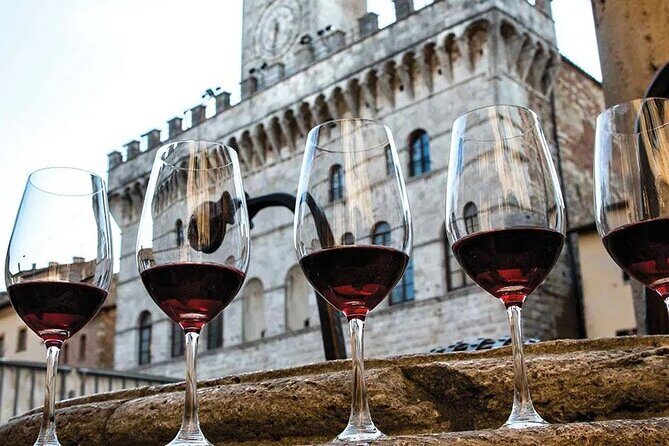
Your lesson focuses on Tuscan wines and how key styles relate to places and grapes. You’ll cover major examples such as Vino Nobile di Montepulciano, Brunello di Montalcino, Chianti Classico, and Supertuscan. The goal is to understand the traits that separate them—aroma, structure, aging expectations, and what you should look for when you taste.
Here’s what I like about this approach: it’s comparison-based. Instead of treating each wine like a separate universe, you’re guided to spot patterns. That makes it easier to answer your own questions like: Why does one bottle feel lighter and fresher? Why does another taste firmer and more structured? Why might the same grape family show up with different personalities?
The guides also encourage questions. In practice, that matters because wine education gets more useful when you can ask about what you’re noticing in your glass. You’ll hear stories tied to production choices and regional context, but the takeaway is always meant to land on your palate.
What you’ll taste in Montepulciano (and why the lineup varies)
The planned structure includes 7 wines plus extra virgin olive oil. Many tastings add up to about 9 bottles for certain groups, so don’t be surprised if the number feels slightly higher once you’re seated.
You can expect Tuscan themes to drive the selection. You’ll specifically look at standout styles including those major names: Vino Nobile, Brunello, Supertuscan, and Chianti Classico. That said, the exact wines can shift, and you may see less-common local expressions depending on the day.
For example, at least one group received a refreshing local white described as a Lyra/Hydra blend, followed by explanations about why acidity can be so welcome after climbing Montepulciano’s hills. Other tastings included multiple Sangiovese variations and even a sweet finish like Vinsanto in the final stretch. Some lineups also included Amarone before closing the lesson.
The takeaway for you: think of this as a guided Tuscany sampler where the theme stays consistent—comparing styles and regions—even if the guest list of bottles changes a bit.
Snacks, water, and olive oil: the underrated part
Wine tastings can feel like punishment if your stomach is empty. Here, you’re covered. You get complimentary water and snacks alongside the wine.
What makes that useful is timing. You can cleanse and re-balance between pours, so you’re not stuck interpreting one strong wine after another. You can also stay present for the explanations, instead of fading into hunger.
You’ll also taste premium extra virgin olive oil, which is a smart addition if you want to understand Italian flavors beyond grapes. Olive oil gives you a texture and aromatic reference that helps you notice bitterness, fruit, and balance in the wines more clearly. It also connects the tasting to how real Italian meals work, where wine is only one player at the table.
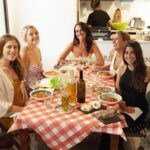
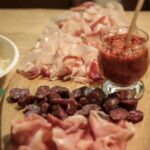
Several people mention the food pairing quality—cheese, meats, and bread being highlights—so it’s not the kind of snack you’d ignore. If you want value, this part matters.
Other wine tasting experiences in Montepulciano


Francesco and the sommelier team: storytelling with intent
Francesco is a central figure in the Perbacco Wine Club world. You’ll hear him described as leading the experience and sharing with passion—and the tone is friendly, not high-handed. Erica and Tassos show up in different groups too, and the common thread is how they translate wine into human terms.
A pattern in the feedback is that the guides are funny and engaging, but still keep things structured. They help you ask questions without feeling awkward. One review even called out an easy follow along in English, which is key for international visitors who don’t want to fight language while learning tasting terms.
There’s also an important practical note: the wine club angle exists, but it doesn’t have to feel like a hard sell. People have described it as good-natured rather than pushy. If you’re interested, the club concept includes the option to continue the journey at home, and some guests mention ordering bottles for shipment after the tasting.
If you want a tasting that feels like a real conversation—with actual wine facts behind it—this team seems built for that.
Price and value: is $83.27 for 1 hour 45 minutes worth it?
At $83.27 per person, you’re paying for more than a few tastes. You’re paying for the professional sommelier time, the structured comparison of major Tuscan styles, and the fact that the experience is bundled with snacks, water, and extra virgin olive oil.
You also get a small-group format capped at 25 people, which matters because wine education works best when you can see, ask, and keep pace. If you were in a giant group, you’d lose part of the value. Here, the lesson stays interactive enough that most people leave with a clearer sense of what they like.
Is it cheaper than buying bottles in a shop? Sure. But it’s not trying to replace shopping. It’s trying to replace guesswork. In a single sitting, you can learn how styles differ—so the next time you choose between Chianti Classico and something more structured like Brunello or a Supertuscan, you’re not starting from zero.
One more value detail: the experience runs about 1 hour 45 minutes, starting at 4:00 pm. That’s a good length. You get enough pours to learn without feeling like you’ve committed your whole afternoon.
Making it part of your Montepulciano evening
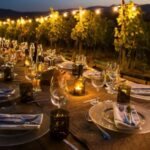
A lot of the fun is that you’re not just drinking in isolation. Osteria del Borgo sits at the center of the experience, and some people extend the day with dinner afterward—especially on the terrace.
If you’re the type who likes to stay flexible, plan your schedule so you’re not forced into a rushed meal right after. If you’re staying nearby, this tasting is an easy anchor: start with the aperitif, get your wine education, then decide if you want to linger for a food-and-wine pairing.
Also, if you’re in town with a companion who likes the social side more than the technical side, this format can still work. You get a shared activity with enough structure to keep both people engaged.
Who this Montepulciano tasting fits best
This experience is a great match if you want a guided understanding of Tuscan wine without jumping into the logistics of a full producer visit. It’s especially good for:
- Wine-curious travelers who want practical explanations in English
- People who like tasting education tied to real regional names like Vino Nobile and Brunello
- Anyone who prefers small-group attention over a crowded group tour
- Food-minded visitors who appreciate that snacks, water, and olive oil are part of the lesson
It’s less ideal if your main goal is a behind-the-scenes winery tour with vineyard views and barrel rooms. This one is built around tastings in restaurant spaces.
Should you book this Montepulciano wine tasting?
If you want to leave Montepulciano feeling more confident ordering wine, I’d say yes. The combination of a terrace aperitif, a cellar-room lesson, and a guided comparison of major Tuscan styles is a solid use of time. The included snacks, water, and olive oil turn it into a real tasting session rather than a quick sip-and-run.
Book it especially if you’re the type who learns best by doing—taste first, then hear the logic. If that’s you, this is a high hit-rate experience.
One final tip: because the group size is capped at 25 and it’s popular enough that many people book well ahead, don’t wait until the last minute if you’re traveling in peak season.
FAQ
What time does the tasting start in Montepulciano?
It starts at 4:00 pm at Osteria del Borgo, Via Ricci 5, 53045 Montepulciano (SI), Italy.
How long is the experience?
The tasting lasts about 1 hour 45 minutes.
How many wines are included?
The tasting includes 7 Italian wines, plus premium extra virgin olive oil.
Is the tour offered in English?
Yes. The experience is offered in English.
Are snacks and water included?
Yes. You receive complimentary water and snacks with the tasting.
Is this a small group?
Yes. The activity has a maximum of 25 travelers.
Can I get a refund if I cancel?
You can cancel for a full refund if you cancel at least 24 hours before the experience’s start time.