REVIEW · CHIANTI
Chianti -Fresh Pasta Making Class and Sauces with Lunch or Dinner
Book on Viator →Operated by SiChef - Cooking Experience · Bookable on Viator
Flour, views, and four kinds of pasta. In Chianti, you’ll join a private fresh pasta class in a real kitchen, guided by a chef as you learn dough and shape techniques and then eat what you make with wine. I especially liked two things: the Chianti hill view from the reception, and the fact that lunch is built around your own pasta. The one drawback to consider is that some prep may happen alongside you (so it can feel partially “hands on” rather than every second solo).
You’ll spend about 3 hours in Barberino Tavarnelle (around 30 km from Florence). The class is taught in English, and you’ll leave with recipes to repeat at home—plus a meal that includes appetizers, dessert, water, and coffee. It’s also popular enough that many people book it about a month ahead, so I’d plan early if your dates are set.
In This Review
- Key things I’d circle on the calendar
- Chianti pasta class location: a real break from Florence bustle
- The reception: welcome drink plus a view worth slowing down for
- What you actually make: ravioli, tagliatelle, cappelletti, and gnocchi
- Sauces in Chianti: matched pairings with seasonal ingredients
- The meal: appetizers, wine, dessert, and coffee built around your work
- Skill level: great for beginners, and it adapts as you go
- Group size and the feeling of the class: private, but not always tiny
- Price and value: why $144.03 can make sense here
- Practical tips so your evening goes smoothly
- Should you book this Chianti fresh pasta class?
- FAQ
- How long is the Chianti fresh pasta making class?
- Where does the class start and end?
- Is it a private class?
- Is the class taught in English?
- What types of fresh pasta will you make?
- Is lunch or dinner included, and what comes with the meal?
- Will you get recipes to take home?
- Are service animals allowed?
- What is the cancellation policy?
Key things I’d circle on the calendar
- Private to your group: you don’t mix with strangers, but the experience can still run like a lively class.
- You make multiple pastas: options include ravioli, tagliatelle, cappelletti, and gnocchi.
- Sauces are paired to your pasta: learn how to match shape and sauce instead of making random toppings.
- A full meal is included: local cold cuts and cheeses, your pasta, a glass of Chianti wine, dessert, water, and coffee.
- Recipes to take home: you’re not just tasting—you’re learning enough to cook again later.
- Beautiful “start of evening” setting: reception includes a welcome drink with a view toward Chianti hills and Barberino Val D’Elsa.
Chianti pasta class location: a real break from Florence bustle
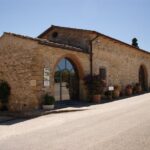
This is one of those Tuscan experiences that feels like it belongs in the countryside, not bolted onto a city schedule. You’re based in Chianti, specifically in Barberino Tavarnelle—starting at Str. Spoiano, 1 (and ending back there). The description puts it about 30 km from central Florence, so plan for a short ride out of town.
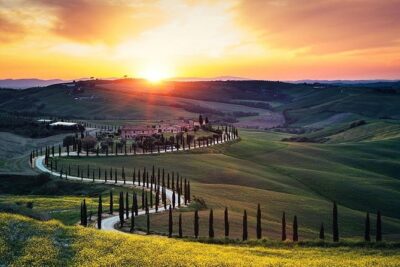
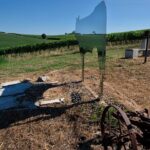
That distance matters. It buys you two things: calm and perspective. The reception includes a welcome drink and a breathtaking view of the Chianti hills, plus an enchanting glimpse of Barberino Val D’Elsa. Even before you touch dough, you’re already in the right mood for food that tastes like it’s grown nearby.
It’s also offered with a mobile ticket, so you can keep things simple on arrival. And because it’s listed as being near public transportation, you’re not forced into a private car just to get there. Still, if you’re combining it with a Florence day, give yourself a bit of buffer so you’re not rushing through the ride, check-in, and that first welcome drink.
Other Chianti wine tours we've reviewed in Chianti

The reception: welcome drink plus a view worth slowing down for
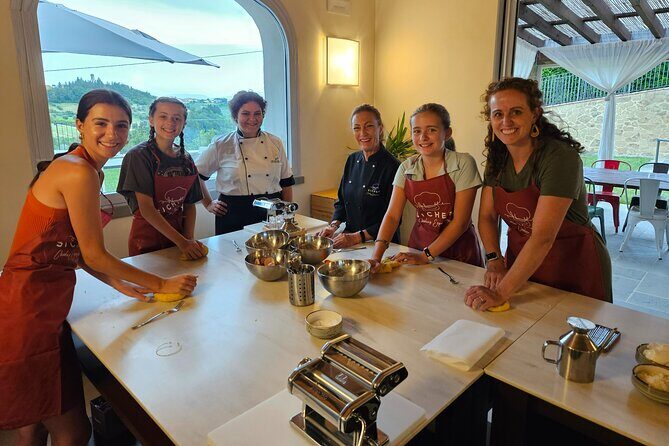
Before the cooking starts, you’ll be welcomed and brought into the setting. The class begins with reception plus a welcome drink, and the key detail here is the panorama—Chianti hills rolling out in front of you, with Barberino Val D’Elsa in view.
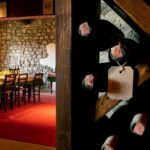
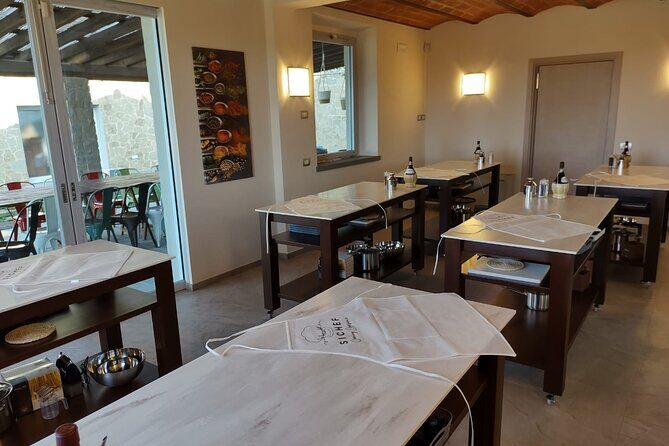
I like this kind of opening for two reasons. First, it helps you switch gears from sightseeing to “I’m here to learn food.” Second, it sets expectations: this isn’t a storefront workshop with fluorescent lights. It’s a home-kitchen style environment with an outdoor-to-indoor flow, and you’ll feel that as the evening settles in.
You’ll meet the chef after that welcome. At this point, you’ll also get oriented to what’s happening over the next three hours: dough prep, shaping, sauces, then tasting everything together.
What you actually make: ravioli, tagliatelle, cappelletti, and gnocchi
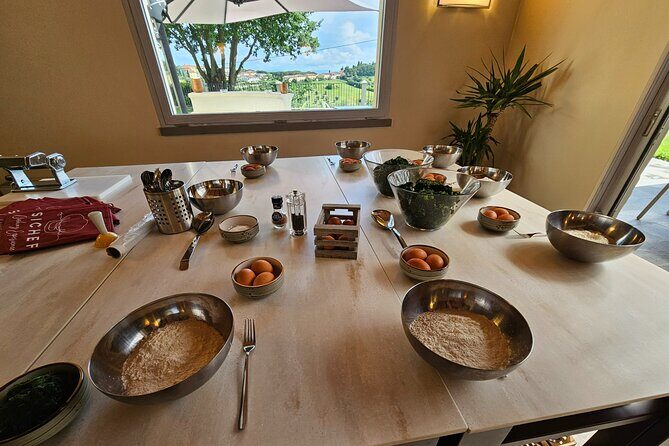
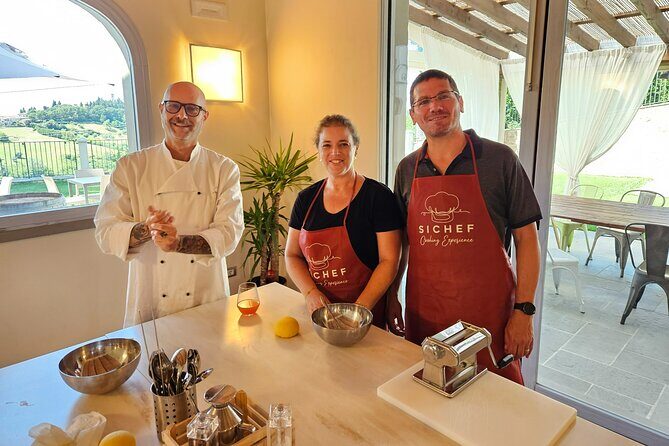
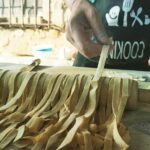
The heart of this experience is learning fresh pasta. Over about three hours, you’ll prepare 2–3 types of fresh pasta, and the menu examples include tagliatelle, gnocchi, cappelletti, and ravioli.
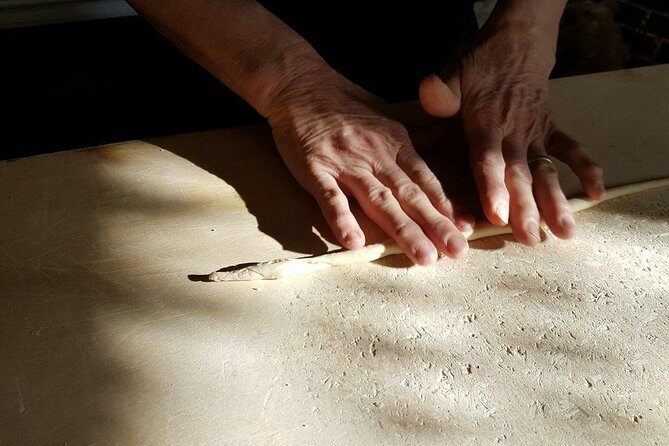
Here’s why this is worth your time: learning to make fresh pasta isn’t only about eating well. It’s about understanding texture and control. Dough with flour, water, and eggs behaves differently than dried pasta. It needs the right mix, the right rest, and the right handling so it turns tender (not tough) and holds sauce instead of sliding off.
Based on how the class is described, the focus is on techniques you can repeat: you’ll work through making ravioli, tagliatelle, cappelletti, and gnocchi using just basic ingredients—flour, water, and eggs—guided by the chef. That “basic ingredients” detail is important. It means you’re not relying on hard-to-find mixes. If you can get eggs and flour at home, you’re already halfway to recreating it.
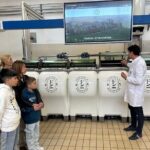
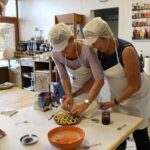
One practical note: some classes run fully step-by-step with you doing everything at once. This one can feel more like a shared workshop at times, where staff may handle parts early on while you get hands-in shape time later. In plain terms: you should expect coaching and participation, but not every second may be you alone rolling dough from scratch. If you want zero assistance at all, you may feel a little impatient at the start. If you want to learn efficiently and end with pasta you’re proud of, you’ll likely enjoy the pace.
Sauces in Chianti: matched pairings with seasonal ingredients
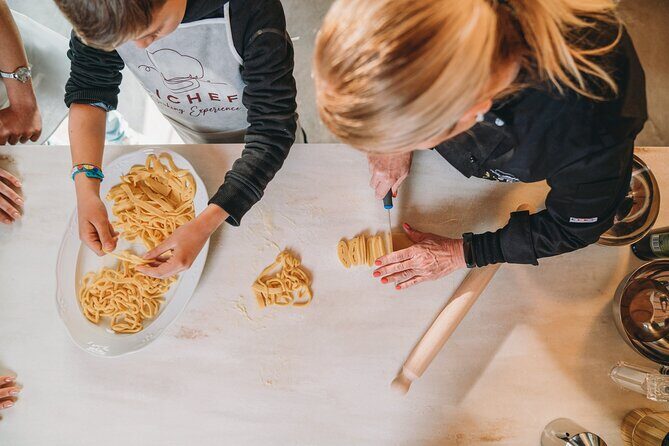
Fresh pasta is only half the story. The other half is how sauces and seasonality work together. You’ll learn seasoning sauces that match the type of pasta you’re preparing, guided by the chef.
The class description specifically highlights that the pasta and condiments are prepared using seasonal products. That’s not just a feel-good line. It affects flavor in a real way. Seasonal ingredients change what tastes bright, what tastes mellow, and what balances a richer dough.
This pairing idea is the part I think helps most when you cook later at home. Instead of memorizing a sauce recipe as a standalone thing, you start thinking: What sauce clings to what shape? What sauce complements what texture? Tagliatelle often works beautifully with sauces that coat rather than overwhelm. Ravioli asks for something that won’t drown the filling. Gnocchi tends to enjoy sauces that hug and cling.
You’ll also see the sauces being made alongside you, with the chef explaining what you’re doing and why. That’s useful for beginners because you’re not just copying steps—you’re learning decision-making.
The meal: appetizers, wine, dessert, and coffee built around your work
After the cooking, the class turns into eating. And it’s not a token tasting. The included meal covers a full sit-down experience.
Here’s what’s on the table in the class format described:
- Appetizers based on local cold cuts and cheeses
- The pasta you prepared, served for you to taste
- 1 glass of wine (Chianti wine is specifically mentioned as being paired)
- Dessert
- Water and coffee
This is one of the biggest value points of the experience. You’re not paying mainly to watch. You’re paying for an outcome: you’ll eat pasta that comes from flour, water, and eggs—plus you’ll get local cheese and cured meats beforehand, then dessert to close it out.
Wine is included as well, which fits the vibe of Chianti. It also keeps the meal from feeling like a classroom snack. You’ll be able to sit with what you made, taste it properly, and notice the difference between hand-made fresh pasta and anything from a dry package.
If you’re thinking about family or friend groups, this also helps. Even if one person worries they won’t be good at pasta, the meal still lands as a satisfying dinner-style experience.
Other cooking classes in Chianti

Skill level: great for beginners, and it adapts as you go
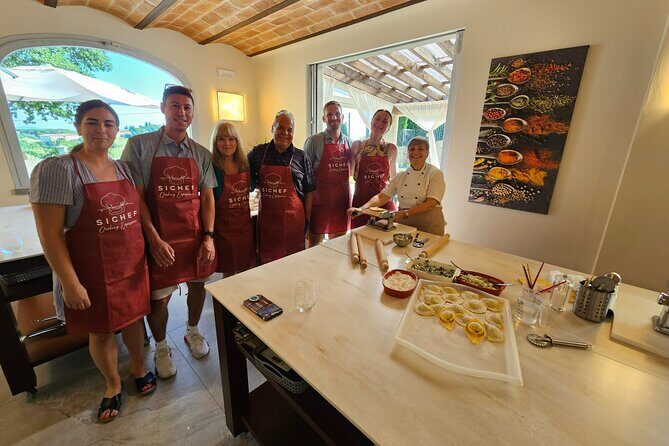
The class is taught with clear guidance, and the cooking format is friendly toward beginners. One detail I appreciated from the overall experience description is the goal of making homemade pasta “easy and successful.”
That doesn’t mean it’s trivial. Fresh pasta has real technique: dough consistency, rolling or shaping, and how not to ruin the texture while working quickly. But the chefs and hosts are set up to teach you, not just hand you a tool.
If you’re traveling with mixed skill levels, this is a good call. You can be “new to dough” and still end the class with pasta that tastes right, especially because you’re cooking in a supervised environment and tasting as you go at the end.
Also, kids and families can often enjoy it when the kitchen rhythm is paced. There’s specific mention of good care for kids in the overall feedback, which suggests the staff understands how to keep hands moving without turning it stressful.
If you’re an experienced cook, you’ll still get value from the specific shaping variety (ravioli, tagliatelle, cappelletti, gnocchi) and from learning sauce pairing logic—so you may be able to fine-tune your instincts rather than relearn everything from scratch.
Group size and the feeling of the class: private, but not always tiny
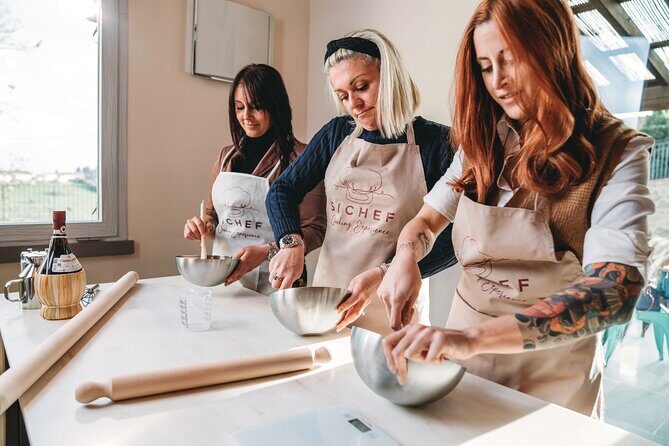
This activity is private to your group. Only your group participates. That means no strangers popping in and out.
But that doesn’t automatically mean it’s a quiet, one-on-one workshop. Some classes can run with a group size that feels like a small class—around 15 to 20 has shown up in the experience feedback. When that happens, you might notice staff doing parts early to keep the timeline moving, and you may join more fully once dough is at the right stage.
So here’s how I’d think about it as a reader: ask yourself what you want most. If you want maximum individual attention on every step, you might want to confirm the group size for your exact date. If you want to learn quickly, shape fresh pasta, and eat a full meal in a beautiful setting, this format can be a sweet spot.
Price and value: why $144.03 can make sense here
At $144.03 per person for about three hours, the price isn’t just “pay for flour.” You’re paying for:
- a chef-led class in fresh pasta techniques
- multiple pasta types (2–3 types in the class format described)
- sauce learning matched to the pasta
- a full meal with appetizers (cold cuts and cheeses)
- Chianti wine (1 glass)
- dessert
- water and coffee
- recipes to take home
The value is strongest if you’d otherwise spend money on a Tuscan food meal plus a separate cooking workshop. Here, those are bundled. You also get the setting—Chianti hills view at reception—that you don’t get in many city-based cooking classes.
If you’re trying to do Tuscany on a budget, this might be a “pick one big food experience” choice rather than something you stack with multiple paid activities. But if pasta is a priority, it’s a fair deal for what’s included.
Practical tips so your evening goes smoothly
A few small things make this kind of class more fun and less stressful:
- Arrive a little early so you can settle in for the reception and welcome drink without rushing.
- Wear comfy clothes. You’re working with fresh dough, and kitchens get floury.
- Plan to stay for the full tasting. The best learning happens when you eat what you made and compare textures and flavors.
- Ask the chef about the seasonality. The class highlights seasonal ingredients and sauce logic, and that’s where you’ll get the transferable tips for cooking later.
- Bring a plan to use the recipes at home. Because recipes are included, it’s worth deciding what you’ll try first—ravioli and tagliatelle are usually the crowd-pleasers for repeat cooking.
You don’t need special gear listed in the description, and the class provides a guided setup in a professional workspace. Just show up ready to work with your hands and taste with your brain.
Should you book this Chianti fresh pasta class?
Book it if you want a hands-on Chianti food experience that ends with a real meal you helped create—plus a view that makes you pause before you start cooking. It’s especially appealing if you’re a beginner or “learn by doing” traveler, because the chef-led pacing and recipe handoff help you succeed.
Skip it (or confirm group size first) if your top priority is a perfectly hands-on, every-step-only format with minimal staff prep. The class is still participatory, but the shared workshop pace may not satisfy someone who wants total solitary control from minute one.
If you’re choosing between another Florence cooking option and this one in Chianti, I’d lean here when possible. The combination of fresh pasta techniques, seasonal sauce pairings, and the countryside setting makes it feel like a true Tuscany day, not a detour.
FAQ
How long is the Chianti fresh pasta making class?
The class runs for about 3 hours.
Where does the class start and end?
It starts at Str. Spoiano, 1, 50028 Barberino Tavarnelle FI, Italy, and ends back at the same meeting point.
Is it a private class?
Yes. It is listed as a private tour/activity, and only your group will participate.
Is the class taught in English?
Yes. English is offered.
What types of fresh pasta will you make?
You’ll prepare 2–3 types of fresh pasta. The pasta types referenced include ravioli, tagliatelle, cappelletti, and gnocchi.
Is lunch or dinner included, and what comes with the meal?
The experience includes the meal (lunch or dinner) with appetizers made from local cold cuts and cheeses, the pasta you prepare, 1 glass of wine, dessert, water, and coffee.
Will you get recipes to take home?
Yes. At the end of the lesson, you receive the recipes to reproduce at home.
Are service animals allowed?
Service animals are allowed.
What is the cancellation policy?
You can cancel for a full refund up to 24 hours before the experience starts. If you cancel less than 24 hours in advance, the amount paid is not refunded.