REVIEW · SAN GIMIGNANO
San Gimignano private guide: Manhattan of the Middle Ages
Book on GetYourGuide →Operated by Italygonia Travel T.O. · Bookable on GetYourGuide
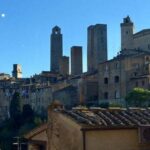
Towers give San Gimignano instant drama. I love the way the guide helps you spot the Torre Grossa from the best angles, and I also love getting inside the Santa Maria Assunta church to see the frescoes up close. One heads-up: this is a hill-town walking tour, and it is not suitable for wheelchair users.
This private format makes a real difference here. You start at the porta San Giovanni gate with a licensed guide badge clearly visible, and you can ask questions as you go, instead of waiting your turn in a crowd.
Do plan ahead for a couple of add-ons. Cathedral entry tickets and food and drinks are not included, and the tour does not include transfers unless you request them, so budget a little for your own pace and snacks.
In This Review
- Key points I’d plan around
- First steps: meeting at porta San Giovanni and getting oriented
- San Gimignano’s skyline of towers: why the hill matters
- Torre Grossa in Piazza del Duomo: your best tower stop
- San Gimignano Cathedral: Romanesque outside, surprises inside
- Santa Maria Assunta frescoes: where the tour becomes memorable
- Piazza della Cisterna and Palazzo Comunale: power, plumbing, and photos
- A taste of San Gimignano: Santa Fina ice cream and optional local sips
- Two hours well spent: the real itinerary rhythm
- Price and value: paying for a guide’s direction, not just a route
- Should you book this San Gimignano private guide?
- FAQ
- How long is the San Gimignano private walking tour?
- Where does the tour start and end?
- What’s included in the price?
- What’s not included?
- Do you get a guide in English and Italian?
- Is the tour wheelchair accessible?
Key points I’d plan around
- Torre Grossa photo angles from both Piazza del Duomo and the area near Palazzo Comunale
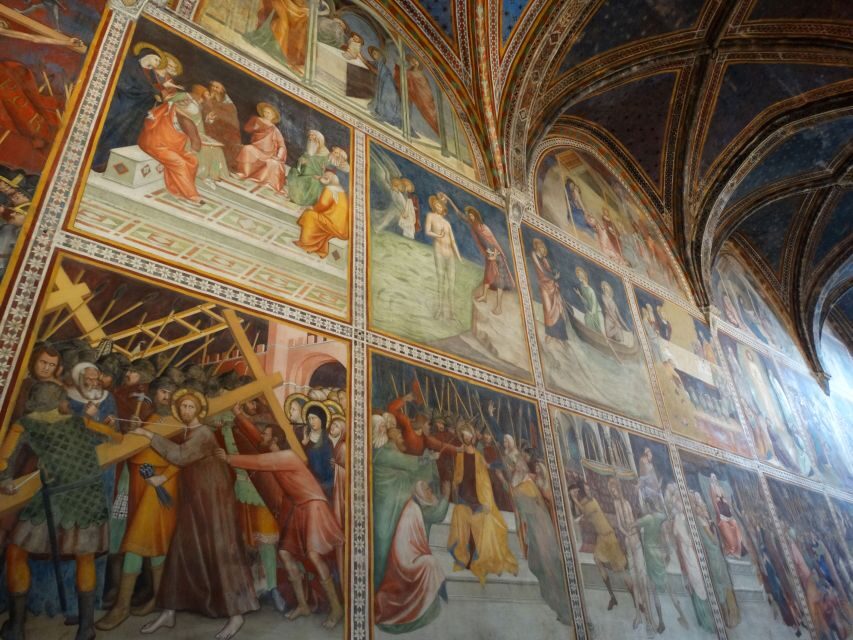
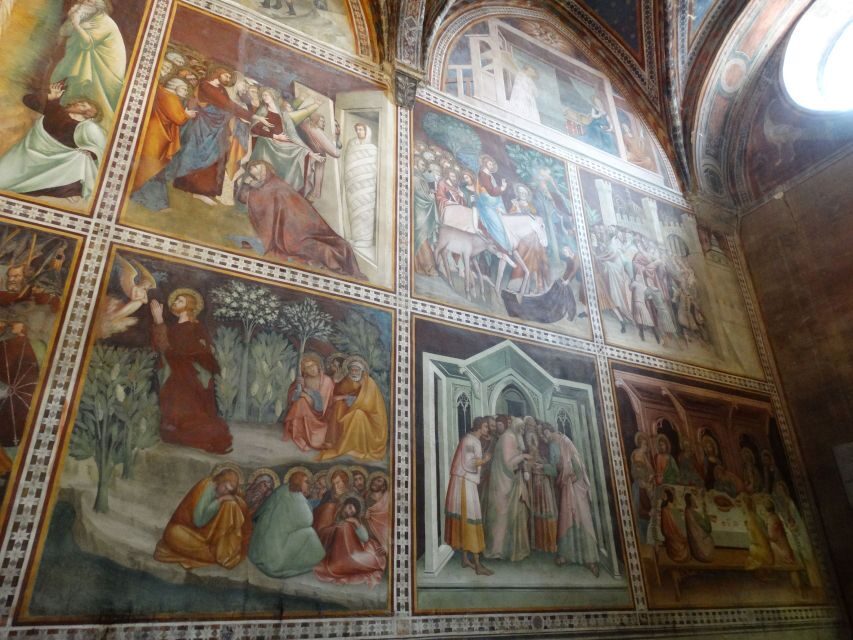
- Santa Maria Assunta frescoes inside the Collegiate Church of Santa Maria Assunta
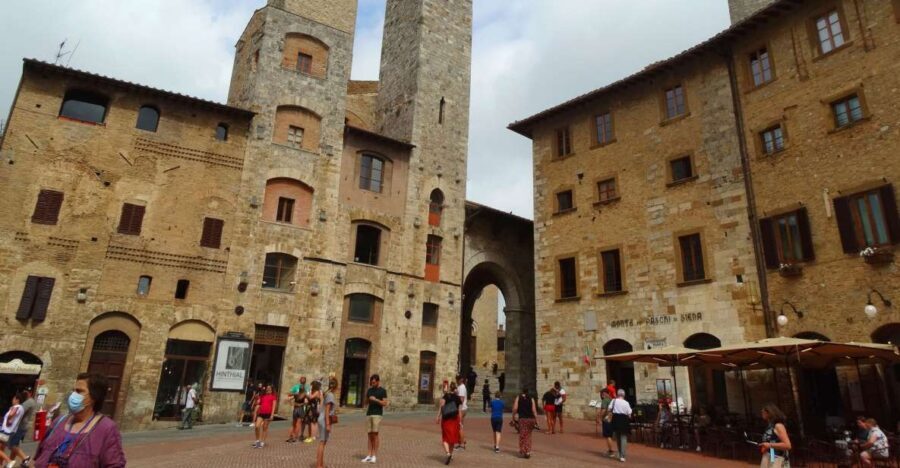
- Piazza della Cisterna and its famous octagonal well built by Podesta Guccio dei Malavolti
- San Gimignano Cathedral with a simple Romanesque facade and three naves to explore
- Guides who tailor questions (I really liked the friendly, accommodating approach from guides like Agnes and Valentina)
- A serious stop for ice cream, including Santa Fina cream with saffron and pine nuts
First steps: meeting at porta San Giovanni and getting oriented
You begin your tour at the porta San Giovanni gate, right where the old town logic starts to make sense. The guide’s license badge hangs around the neck and is easy to spot, so you’re not playing guessing games at the start. Since the tour is private, you can take a moment to settle in before you start climbing into the medieval streets.
I like that the format keeps you moving but not rushed. In a place like San Gimignano—where towers compete for your attention—your brain needs help picking priorities. A guide gives you that quick mental map: where the big sights are, what you should notice as you pass, and where to stop for viewpoints that actually work.
Also, you end back at the meeting point. That’s useful if you want to keep the rest of your day flexible afterward—grab lunch, browse shops, or just wander without worrying about an end-location scramble.
Other San Gimignano tours we've reviewed in San Gimignano


San Gimignano’s skyline of towers: why the hill matters
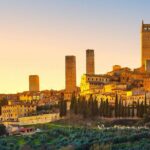
San Gimignano is often described like a medieval Manhattan, and once you start walking, you get why. The town was built on a hill, and the preserved towers make the entire place feel like a vertical statement—wealth and power shown in stone, not speeches.
On this walking route, you’ll stroll through medieval alleys and get repeated opportunities to look upward. That matters because San Gimignano isn’t just one viewpoint—it’s a series of them. Each corner seems to reframe the skyline, and the guide helps you understand which towers represent the story of the town.
The 14 towers are the key symbol here: they’re the reason people come for this “perfectly preserved” look. You don’t need an architecture degree to appreciate it, but you do need a sense of what you’re looking at. A private guide keeps you from treating the towers like wallpaper. You learn how to read the street plan the way locals once would have: corridors, squares, and strategic sightlines.
Torre Grossa in Piazza del Duomo: your best tower stop
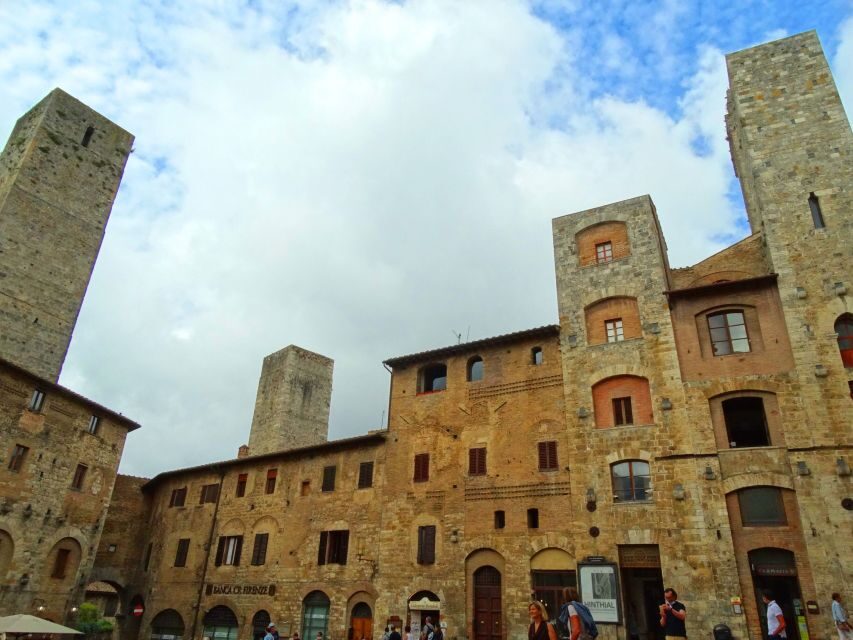
The anchor moment is Torre Grossa in Piazza del Duomo. This is the tower people point at first, but the more helpful part is how the tour teaches you to look at it. You’ll see it from several angles around the square, so it doesn’t feel like a single postcard moment.
Why this stop is worth your time: Torre Grossa isn’t just tall. It’s central, and it gives you a visual reference point while you keep walking. Once you understand how it sits in the space, other towers start to click into place in your mind.
From Piazza del Duomo, you also get the payoff of matching town landmarks with the tower views. The guide’s timing helps here—standing in the right spot at the right moment changes how the whole skyline reads. You’ll likely take more photos than you planned, but in this case, you can justify it.
A small practical note: Torre Grossa views involve looking up a lot. If you’re wearing sunglasses, bring them down occasionally so you can actually make out details when the light shifts.
San Gimignano Cathedral: Romanesque outside, surprises inside
Next up is San Gimignano Cathedral, a small jewel with a simple Romanesque facade. From the outside, it’s easy to think you’re getting a quick stop, but the timing is designed so you can enter while your legs are still fresh enough to enjoy the interior.
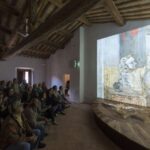
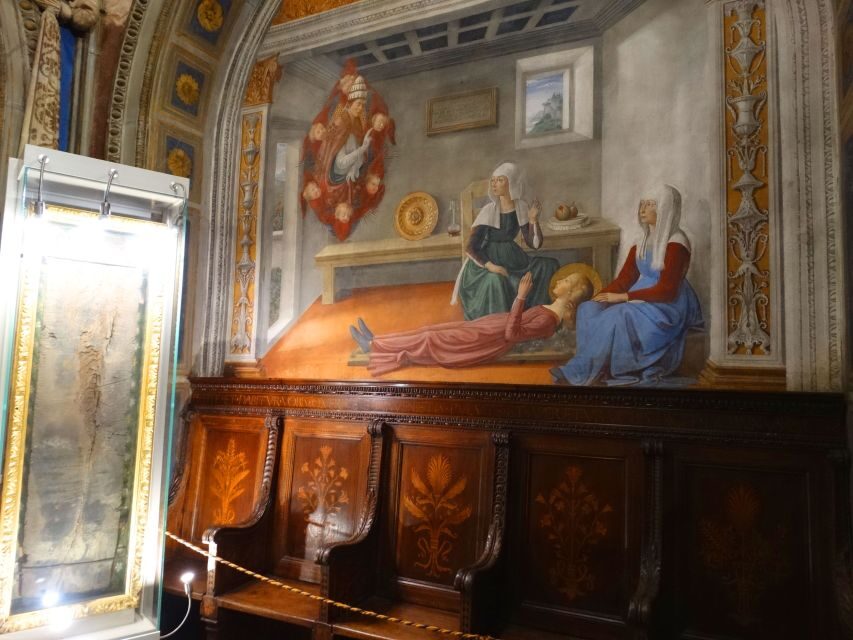
Inside, the Cathedral experience is built around structure and art. You’ll walk through the three naves, and the emphasis is especially on the Collegiate Church of Santa Maria Assunta, which is covered with frescoes. Even if you don’t consider yourself an art person, frescoes change how you see a space. They give the walls a voice.
One drawback to know up front: cathedral tickets entry are not included. That means there may be a small cost on the day, and you’ll want to plan for it so the visit stays smooth. The good news is that a guide makes the interior time feel purposeful—you’re not left wondering what’s important or where to look first.
When I think about value in a tour like this, the Cathedral is the reason to choose a guide. San Gimignano is full of pretty streets. The Cathedral is where the town turns from scenery into something with detail you can actually learn and remember.
Santa Maria Assunta frescoes: where the tour becomes memorable
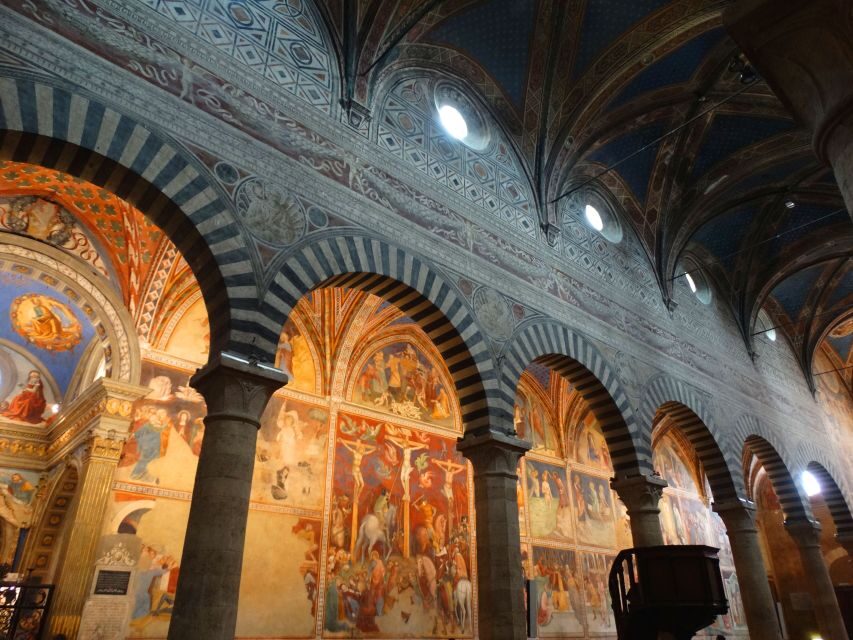
The highlight inside the Cathedral setup is the Collegiate Church of Santa Maria Assunta and its frescoes. This isn’t a random stop; it’s one of the tour’s main anchors. A guide helps you focus on what you’re seeing, instead of just letting your eyes skim.
Why this matters: frescoes can look overwhelming if you don’t know where to begin. With guidance, you learn how to slow down in the right places—so you’re not only taking in color, but also noticing the storytelling and composition.
I also appreciate that the tour balances this more “indoor attention” with outdoor viewpoints. Two hours can vanish fast in a hill town. Here, the pace feels designed: outside for the drama, inside for the details.
If you’re the type who likes to read a little while you look, this part gives you plenty to work with. If you’re more visual, it still works—you can pick a section and let your guide’s explanation guide your eye.
Other guided tours in San Gimignano

Piazza della Cisterna and Palazzo Comunale: power, plumbing, and photos
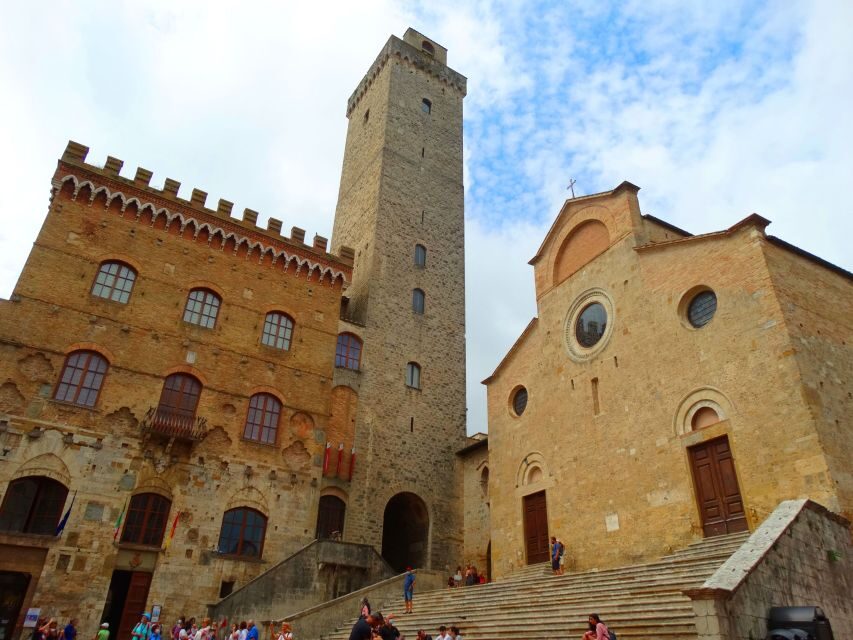
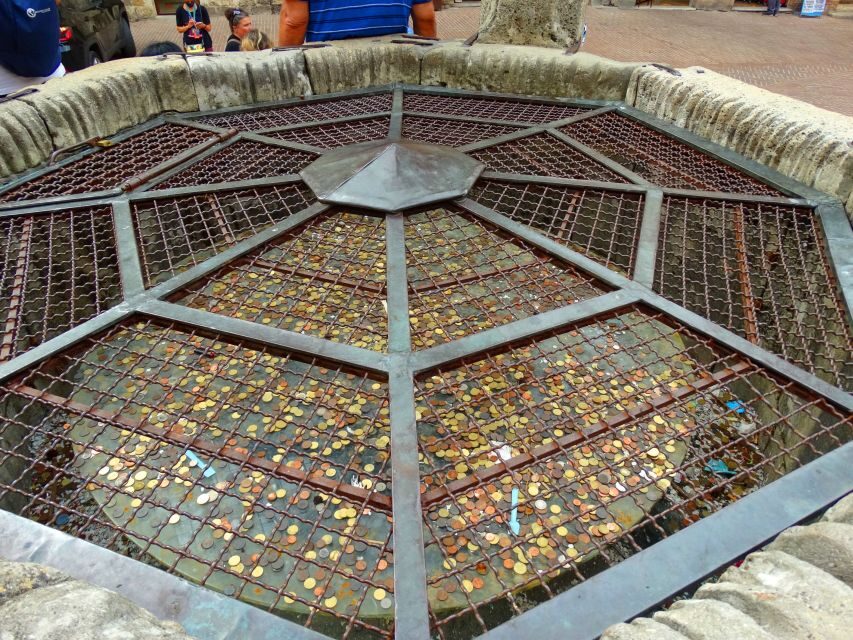
If you want the “this is why I came” square, it’s Piazza della Cisterna. The center attraction is the octagonal well, built by the Podesta Guccio dei Malavolti. It’s a practical feature, but the tour frames it like a town stage—because water management was power in medieval life.
This is also one of the best places to catch that clean, postcard-friendly view of the surrounding buildings. The square gives you a chance to look around without your neck doing constant gymnastics like it does up near the towers.
From here, you also connect to the Palazzo Comunale area for additional perspectives. That combination is clever: Piazza della Cisterna gives you structure and history, then the Palazzo area brings you back to the skyline and the tower views.
The guide’s job here is to point out what the space is doing. A square isn’t just a place to stand. In medieval towns, squares were where people met, traded, and saw who had authority. Once you notice that, the buildings stop being background and start acting like evidence.
If you’re chasing photos, this is your sweet spot. You can take pictures facing buildings, then pivot to catch tower lines and sky. It’s the kind of stop that lets you breathe and reset between walking segments.
A taste of San Gimignano: Santa Fina ice cream and optional local sips
This tour doesn’t treat food like an afterthought. You’ll have the chance to taste one of the best ice creams in the world, including Santa Fina cream with saffron and pine nuts. That flavor combination isn’t generic, and it’s exactly the sort of local specialty that makes a short tour feel like more than just sightseeing.
If you’re the type who likes to plan your meals, keep this detail in mind: food and drinks are not included, so this is an optional add-on depending on what you want to spend. The tour’s value comes from knowing what to look for, not from forcing a purchase.
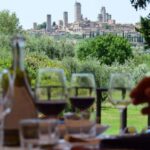
There’s also an option for a local wine or Vernaccia sorbet. Even if you skip alcohol, the sorbet option gives you a taste of local identity without turning your afternoon into a long sit-down. If you’re traveling with someone who likes flavors but not museums, this is a great negotiating point.
Practical tip: if you’re doing photos right after tasting, watch for sticky hands. It sounds silly until you’ve smudged your camera strap with something sweet.
Two hours well spent: the real itinerary rhythm
The tour is 2 hours, and that length is both a strength and a limitation. It’s long enough to cover the major landmarks—Cathedral, key squares, Torre Grossa viewpoints, and the fresco-focused church—but short enough that you won’t get lost in a slow pace.
You’ll start at porta San Giovanni gate, then work through medieval alleys and squares, with guided stops at the most important sites: Torre Grossa in Piazza del Duomo, the Cathedral of San Gimignano, Piazza della Cisterna, and the Palazzo Comunale viewpoints. The final walk back to the meeting point closes the loop neatly.
Who this fits best:
- First-timers who want the “best of” San Gimignano without overthinking
- Couples or small groups who prefer a private group flow
- Art lovers who want to see frescoes and not just pass by buildings
- Photo-focused visitors who want the right angles without wandering aimlessly
Who might find it less ideal:
- People who struggle with lots of uphill walking or older-stone steps (it is not wheelchair accessible)
- Visitors expecting a long sit-down museum experience
- Anyone who wants every detail and stop to last longer than the guided window
Price and value: paying for a guide’s direction, not just a route
The price is $348.92 per group for up to 25 people, with starting times depending on availability. On paper, it’s easy to think, okay, that’s a lot. In practice, the value depends on your group size and how you like to travel.
If you’re traveling with a larger group, the per-person cost drops quickly, and you get a guide managing the flow for a full cluster. If you’re a smaller group, you’re paying more per person, but you’re also buying something hard to replicate on your own: guided prioritization in a dense, tower-filled hill town.
Also remember what’s not included. You’ll likely budget for cathedral tickets entry and for any food and drinks you choose, plus any transfer needs if you haven’t arranged your own transportation. When you add those possibilities, you’ll see that the guide fee is really paying for the walkthrough, the interpretation, and the “where to stand” moments that make the town feel coherent.
Should you book this San Gimignano private guide?
If your goal is to experience San Gimignano’s major medieval landmarks in a tight window, I’d say yes. The tour focuses on the right targets: Torre Grossa viewpoints, San Gimignano Cathedral, and the Santa Maria Assunta frescoes, plus the signature square with the octagonal well.
I’d book it especially if you want a guide who takes questions seriously and helps you choose what matters to you. In the experience I had, the guide approach was friendly and accommodating, like the way Agnes handled questions and needs, or how Valentina stayed informative and helpful with options.
Skip it only if you want a slow, free-form day with lots of long stops, or if walking the hill-town streets is a problem for you. For most people, this is a smart way to get the real San Gimignano feeling without spending your entire afternoon hunting viewpoints.
FAQ
How long is the San Gimignano private walking tour?
The tour lasts 2 hours.
Where does the tour start and end?
It starts at the meeting point with the local guide in porta San Giovanni gate and ends back at the same meeting point.
What’s included in the price?
The tour guide is included.
What’s not included?
Cathedral tickets entry are not included, and food and drinks are also not included. Transfers are only available on request.
Do you get a guide in English and Italian?
Yes. The live tour guide speaks Italian and English.
Is the tour wheelchair accessible?
No, it is not suitable for wheelchair users.