REVIEW · SAN GIMIGNANO
Truffle Lunch & Hunting Experience in San Gimignano
Book on Viator →Operated by Podere la Marronaia · Bookable on Viator
Truffles don’t grow on trees, which is why this is such a fun morning. At Podere La Marronaia, you’ll meet the truffle team (licensed hunters Mirco and Luca) and head into the woods with highly trained dogs to learn how they find underground treasure. I like that it’s hands-on and you get real context for what you’re tasting at the end, not just a made-for-tour story. I also like the payoff: a truffle-based lunch with wine, olive oil, and balsamic pairings that connects the hunt to your plate.
One thing to weigh: the hunt is weather- and dog-dependent, and the full experience runs about three hours. If you’re expecting an all-day expedition (or you’re picky about the winery lunch portion), you may feel the pace is tighter than you want.
In This Review
- Quick takeaways
- Truffle hunting near San Gimignano: what you’re really buying
- Podere La Marronaia and your truffle team: Mirco, Luca, and the dogs
- Walking through the hunt: habitats, trees, and how the search works
- San Gimignano on your doorstep: why the setting matters
- Back to the farm: family story and biodynamic agriculture
- The truffle lunch menu: what’s served and how pairings help
- Price and value: why $233.66 can make sense here
- Logistics that matter: duration, group size, and what to wear
- Who should book this truffle experience—and who might not
- Should you book? My decision guide
- FAQ
- How long does the truffle lunch and hunting experience last?
- Where does the experience start?
- Is lunch included?
- What’s included besides lunch?
- Is private transportation included?
- How many people are in a group?
- Is the tour offered in English?
- What’s the cancellation policy if weather affects the experience?
Quick takeaways
- Mirco and Luca lead the hunt with expert guidance and trained dogs, so you’re not guessing along the way
- You learn the habitat first: what to look for, how truffles are tied to specific trees and conditions, and how hunting works in the field
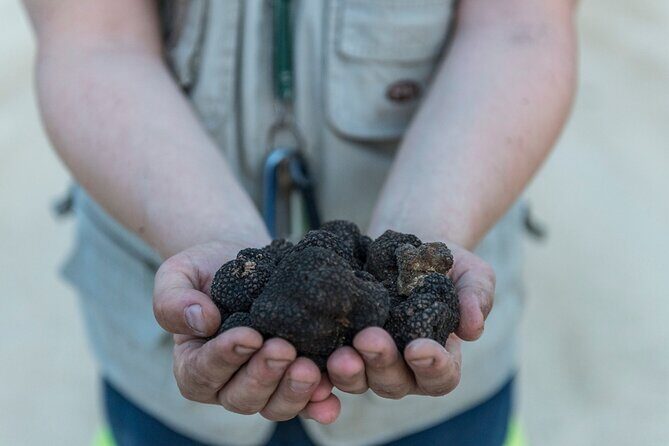
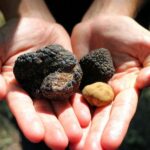
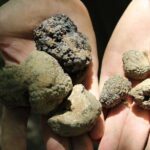
- Hands-on moments are part of the experience, including time with the dogs and seeing what the finds look like up close
- The lunch follows the hunt immediately at Podere La Marronaia, with truffle dishes plus organic wine and tastings of olive oil and balsamic vinegar
- Small group size (max 10) keeps the morning from feeling rushed
Truffle hunting near San Gimignano: what you’re really buying
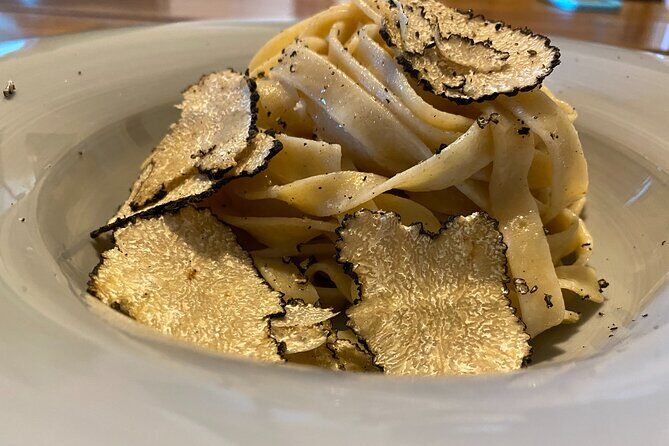
This experience sells two things at once: a genuine outdoor truffle hunt, and then the chance to eat truffles in a way that actually makes sense. The hunt happens in the Tuscan countryside, where you walk through the woods and learn the logic behind where truffles grow. Instead of treating truffles like a mystery box, the guides connect habitat, trees, and scent-driven searching.
Then comes the reason this tour is more than a novelty. You don’t just sample a single truffle item. You move from hunting to a truffle-forward menu, paired with wine, extra virgin olive oil, and balsamic vinegar. That pairing piece matters, because truffle flavor can feel confusing if you’ve only encountered it as a dusting on pasta. Here, you taste it in context and learn how the flavors layer.
The price is a real splurge, but the ingredients are costly and the expertise is specific. You’re paying for trained dogs, licensed guides, and a full farm-style meal afterward—not just a walk and a snack.
Other San Gimignano tours we've reviewed in San Gimignano
Podere La Marronaia and your truffle team: Mirco, Luca, and the dogs
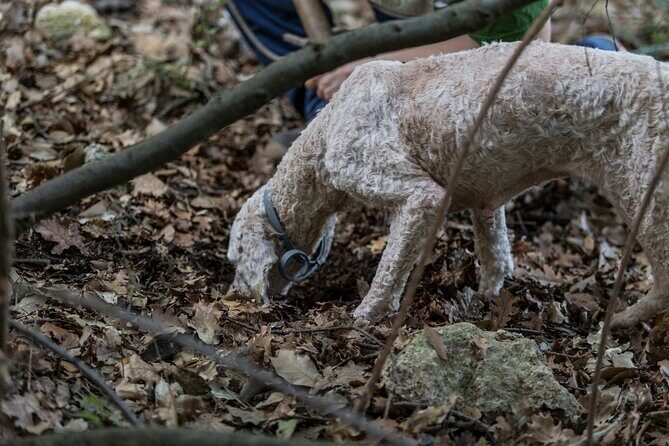
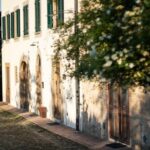
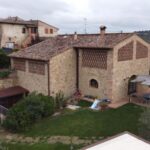
Your morning starts at Podere La Marronaia – Biodynamic Winery & Farm, a straightforward meeting point just outside the center of San Gimignano. The setting is important: this is a working farm, not a city classroom. That makes the agriculture and food story after the hunt feel connected instead of tacked on.
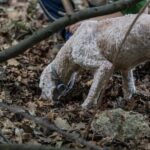
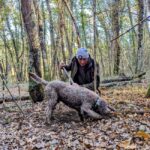
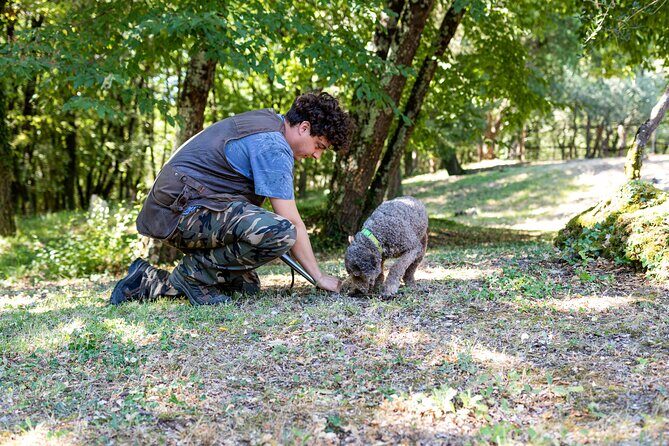
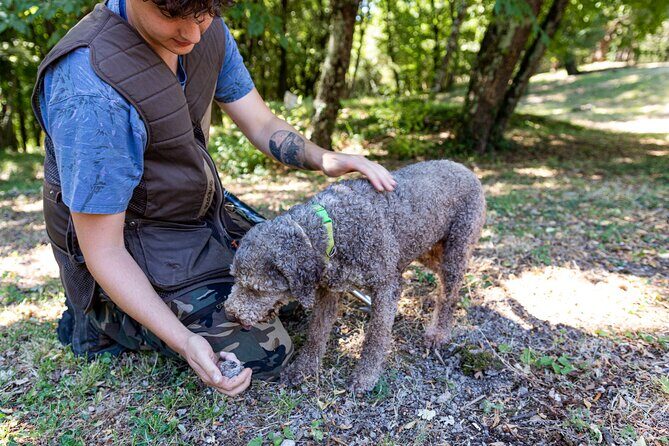
The key people are your licensed guides, Mirco and Luca, plus their truffle-hunting dogs. From what you’ll be shown, the dogs aren’t random “cute helpers.” They’re trained to search, and you’ll see how the hunt is guided by their behavior. You’ll also get a chance to interact with the dogs in a hands-on way. Several people highlight that the guides are happy to let you participate and ask questions, including how to work around the dogs and what to do when they signal.
In practice, this kind of setup keeps the experience lively. You’re not just following quietly behind someone. You’re learning how a trained animal helps solve an underground puzzle.
Walking through the hunt: habitats, trees, and how the search works
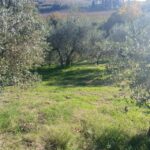
The hunt portion is where this tour earns its reputation. You’re taken to a nearby, truffle-rich area and guided through what makes a place promising. You’ll learn how to identify ideal truffle habitat—then how to connect those conditions to the trees where they grow.
A big part of the learning is practical. Truffles are underground and you can’t spot them the way you spot mushrooms above ground. So the guides focus on the “why” behind the search: what the environment should look like, where you’re likely to find the right conditions, and how dogs indicate potential finds.
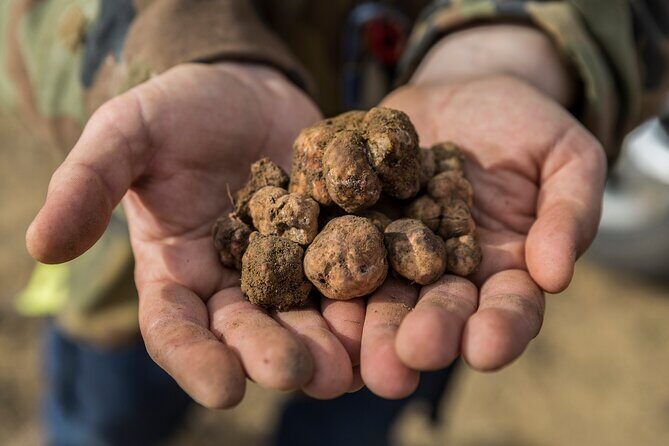
This is also where you get real excitement. When a dog is on scent, the moment changes. You’re watching a small team at work—guide, dogs, and the group—coordinating to uncover what’s hidden under leaves and soil. Several people mention finding multiple truffles during the morning, and even when you don’t end up with a giant haul, the process itself is the value.
One consideration: because truffles are natural and hunting depends on conditions, you can’t treat the hunt as guaranteed high yield. If you’re determined to come home with a specific number of truffles, the hunt will remind you that nature isn’t a factory. Still, you’ll learn the system, and that’s what makes it feel worthwhile even when conditions vary.
San Gimignano on your doorstep: why the setting matters
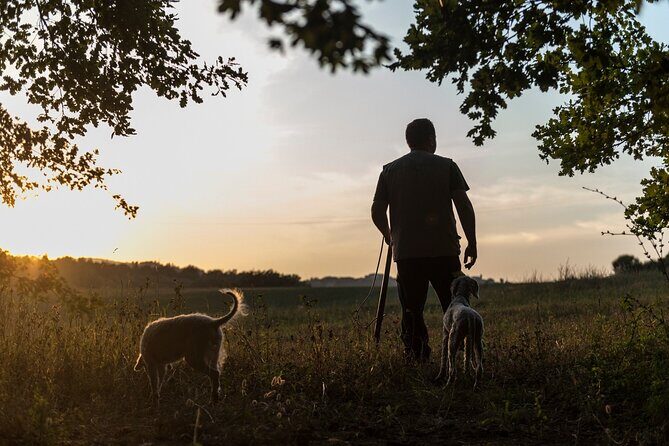
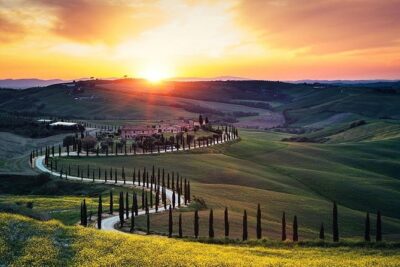
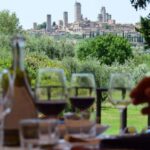
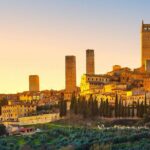
The tour is organized around San Gimignano, which is more than just a name on the ticket. The farm and the surrounding countryside give you that classic Tuscan contrast: medieval stone towers in view nearby, then earthy woods and fields for the truffle hunt.
Even if you don’t spend the day touring the town, you benefit from the location. You get the feel of San Gimignano as a real place, not a distant backdrop. And in the follow-up lunch segment, the winery setting is a highlight for people who want good views without switching locations constantly.
Back to the farm: family story and biodynamic agriculture
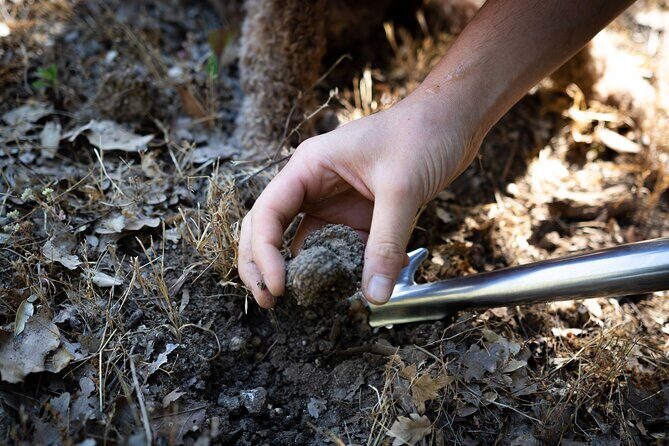
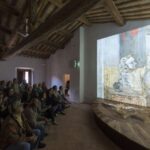
After the hunt, you head back to Podere La Marronaia for a detailed introduction to family history and agriculture. The big benefit here is pacing and context. You’re not eating truffle dishes out of nowhere. You just learned the logic of the hunt, and now you’re shown how the farm operates and why the food is part of that same ecosystem.
Because this is a biodynamic winery and farm, you’re likely to hear how farming decisions connect to the land. Even if you don’t care about labels, it helps you understand why this isn’t a generic “winery stop.” It’s designed to connect how they grow, how they produce, and how they put food on the table.
This stage is also where you slow down. The morning gets you moving; the farm talk brings your brain back into focus so the lunch isn’t just a blur of courses.
Other truffle hunting experiences in San Gimignano
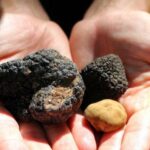
The truffle lunch menu: what’s served and how pairings help
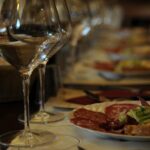
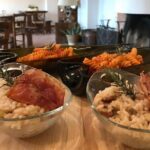
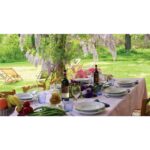
The lunch is the payoff meal, and it’s structured like an actual Tuscan farm menu with multiple courses. You’ll be served bottled water, and the tour includes alcoholic beverages.
Here’s what you can expect from the menu structure:
- Starter: Truffle antipasto, with mixed Tuscan bruschette featuring white and black truffle
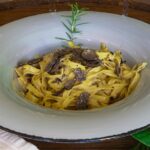
- Main: Pasta with fresh truffle slices
- Second main: Roast beef with fresh truffle, or fried eggs with fresh truffles (choice depends on service)
- Dessert: Dessert of the day
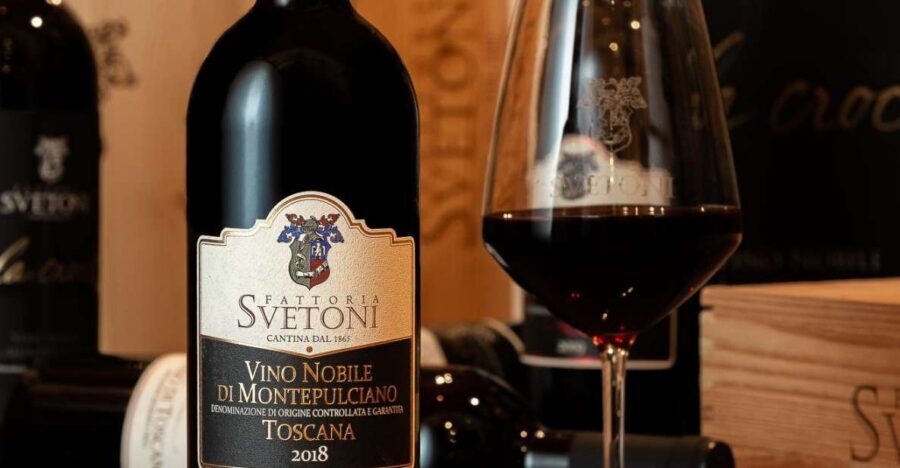
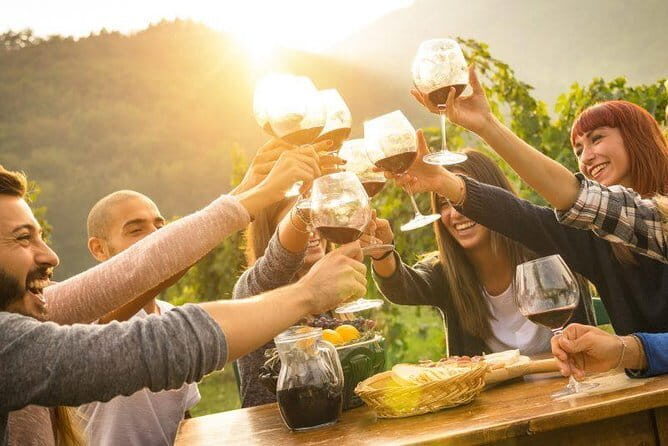
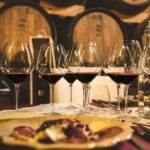
The strongest part of the meal isn’t only that truffle appears repeatedly. It’s that you taste it alongside other flavors on purpose. The pairing component matters: you’ll get wine alongside the dishes, plus tastings tied to the farm’s products—extra virgin olive oils and balsamic vinegar.
That trio of pairings can help you learn something fast. Truffles can taste earthy, nutty, and aromatic. Olive oil brings silkiness and structure. Balsamic adds sweet-sour depth. Wine ties it all together by matching acidity and fat. When the tastings come after you’ve been hunting, the flavor connections click in a way that’s harder to get in a restaurant where you’re missing the context.
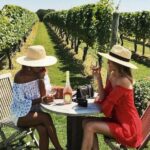
Also, you won’t feel like you’re stuck eating in a bland indoor box. People describe a beautiful setting for lunch, often with outdoor views. That makes the meal feel like a real farm break rather than a rushed tourist meal.
Price and value: why $233.66 can make sense here
At $233.66 per person, this isn’t a budget activity. So I look for three things when judging value: what you’re paying for, what’s included, and what skills you actually take home.
What you’re paying for:
- Truffle hunting is labor-intensive, and it depends on trained dogs and licensed guides
- Truffles themselves are expensive ingredients, and the menu uses them across multiple courses
- You’re not just getting a snack. You’re getting lunch plus alcohol and tastings tied to agriculture
What’s included:
- Lunch
- Bottled water
- Alcoholic beverages
- Truffle hunting
What’s not included:
- Private transportation
Where the value lands for me is the “double education” factor. First, you learn the hunt: habitat, tree connections, and how dogs help. Then you eat: antipasto to pasta to roast beef or eggs, with pairings that help your palate understand what you’re tasting. Many experiences stop at one side of that equation. This one tries to connect both.
Is it worth it? If you love food, Italy, and hands-on mornings, it probably is. If you’re only interested in tasting truffles once with minimal walking and minimal instruction, you might want a more basic food tour. But if you want the story behind the flavor, the price starts to feel like paying for expertise and ingredients, not just scenery.
Logistics that matter: duration, group size, and what to wear
The tour runs about three hours. That means you’ll have a compact schedule: meet at the farm, hunt in the surrounding area, then return for lunch and tastings. The small group size—max 10 travelers—helps here. Fewer people means less waiting, and it’s easier for the guides to manage the dogs and keep everyone involved.
You’ll want moderate physical fitness. You’re walking through woods and fields, and even if the day is clear, you’ll still be on uneven ground. One practical tip from experience: skip fancy shoes. You don’t need heavy hiking boots for every circumstance, but you do want something you can trust on dirt and leaf litter.
Also plan for good weather. The experience depends on it, and poor weather can change the schedule.
Finally, bring a curious mindset. This tour rewards questions. The guides and hunters are there to explain the process, so ask about what you’re seeing with the dogs and how the habitat clues guide the hunt.
Who should book this truffle experience—and who might not
This is a strong match for:
- Food lovers who want a real connection between hunting and eating
- Travelers who enjoy animals and hands-on activities
- People visiting Tuscany who want something memorable beyond tastings in a room
It’s not as perfect for:
- Anyone who wants only a short, low-movement activity
- People who are mostly focused on San Gimignano sightseeing and want more time in town
- Anyone who expects the winery lunch to be the main event rather than part of a larger farm-to-table arc
If you’re cooking-oriented, this tour can be especially satisfying. You start with the sensory puzzle of truffles underground, then you taste truffle flavor repeatedly, paired with fats and acids that clarify the profile. It’s a useful mental map for future restaurant orders and home cooking.
Should you book? My decision guide
Book it if you want a morning with real outdoor energy, guided by licensed hunters and trained dogs, and you want your lunch to feel like it belongs to the hunt. The combination of hunting education plus a full truffle menu with wine and tastings is what makes this worth considering.
Skip it if you mainly want a relaxing vineyard lunch with minimal walking and you’re not interested in learning how truffles are found. Also, if you’re very picky about wine or you expect a long winery program, keep your expectations realistic: the farm part is designed to support the whole truffle experience, not replace it.
If you’re on the fence, check two things before you commit: your comfort with walking through uneven ground and your willingness to treat the truffle hunt as a natural process, not a guaranteed harvest.
FAQ
How long does the truffle lunch and hunting experience last?
It runs for about 3 hours.
Where does the experience start?
The meeting point is Podere La Marronaia – Biodynamic Winery & Farm, Via Martiri di Citerna, 2, 53037 San Gimignano SI, Italy.
Is lunch included?
Yes. Lunch is included, and it is truffle-based.
What’s included besides lunch?
The tour includes bottled water, alcoholic beverages, and truffle hunting.
Is private transportation included?
No, private transportation is not included.
How many people are in a group?
The experience has a maximum of 10 travelers.
Is the tour offered in English?
Yes, it is offered in English.
What’s the cancellation policy if weather affects the experience?
You can cancel for a full refund up to 24 hours in advance. If the experience is canceled due to poor weather, you’ll be offered a different date or a full refund.